Showing posts with label maimonides. Show all posts

Friday, May 10, 2013

How is my Learning? Proposing an Annual Checkup

Rabbi Mishael Zion | Bronfman Fellowships | Text and the City | Shavuot 2013

“The crown of Torah is ready and waiting for all…
all who want are invited to come and take a share”
(Maimonides’ Code, Talmud Torah 3:1)
Here is a proposal for Shavuot beyond the cheesecake. If the High Holidays are the time we inspect our behavior towards others, and Passover the time we take stock of our freedom, then Shavuot, being a celebration of our becoming the “People of the Book”, should be about how we are doing at learning.
Granted, the number of people who maintain a practice of Jewish learning might be slim, but judging by the joy I get from reading articles on exercise and yoga without being much of a practitioner of either, I hope this project can garner some readership. Thus I offer a “Jewish Learning Checkup” for maintaining a healthy and generative learning practice.
This is not a prescriptive brow-beating checkup (we’ll leave that for Yom Kippur), but rather an aspirational diagnostic tool, five categories through which to examine ones practice:
A Jewish Learning Checkup:
1.       Kevah: How can my learning be more than leisure?
2.       Canon: What are the texts I wish to engage with?
3.       Hevruta: Who are the partners challenging me in my journey?
4.       Hiddush: Is my learning generating innovations – in the text and in myself?
5.       Action: Does my learning inspire my actions?
Reflection and context on these five questions follows.

1.       Kevah: Learning as a regular practice
Do not say, I will study when I have the time,
for you may never have the time.”
(Avot 2:4)
How can learning be embedded into an already overstuffed life? How do we prevent it from being relegated to a sporadic leisure activity?
In the age of the Netflix-induced decline of communal cultural campfires, the experience of living in a shared cultural rhythm is even harder to attain in our lives.  This shift is also disruptive to the first floor of Jewish learning which has always been connecting a canon to a communal calendar. This cyclical approach informs everything from the ancient “Parashat haShavua” (weekly Torah portion) to the recent “Daf Yomi” (daily page of Talmud). Text becomes a routinized practice which is weaved into the fabric of the busy life, synchronizing individuals with the pulsating rhythm of a community of learners. It is less about content and more about constant.
Today’s world calls for a learning practice which is a personalized journey, where content and relevance reign supreme, and thankfully so. Yet much can be adopted from the communal calendar approach: Timed benchmarks, even in the smallest of doses, are meaningful – as long as they are regularized. There is enormous power to commitment, whether it is reading “one midrash a week” or “a new Jewish book each year”. It might be a low bar quantitatively, but placing the project of Jewish learning as a fixture of your own story is the significant act here. Celebrating success with a “siyyum” is another great institution: Friends (and smoked fish) are invited to celebrate a learning milestone, adding a healthy social element to a personalized practice, and providing an opportunity for the learner to become a teacher – sharing with others what you’ve learned.
To be sure, knowing one should maintain a practice is a far cry from actually starting one. What makes you go out and do, and then keep it up? Think of your physical exercise practices – what can be learned from those? For the learning you already do –how can you share and celebrate it with others?
2.       Canon: Weaving canonical texts into life
“Turn it and turn it, for everything is in it”.
(Avot 5:26)
I remember the mystified look my daughter gave me when she first saw me kiss a book that fell on the floor. is the practice of deciding that a certain body of texts is of elevated status, and is thus worthy of returning to time and again.  This higher status changes not only the frequency in which the book is read, but also the way in which it is read. Canonized texts are read with a classicist assumption: that one can find personal meaning and relevancy in the text beyond the context in which it was written. The canonized corpus is constantly returned to, creating a language and a collective imagination which shape the learner’s world view. The more regularly we enter the magical kingdom of the text, the more that kingdom becomes the overlay through which we understand our own life and society.
New Canons?
Canonizing
Many think the Jewish canon is a closed one, comprised solely of texts written centuries ago in an imaginary Jewish vacuum. But the Jewish learning canon has always been wider than perceived, and in modern times we have seen an expansion to include Jewish novels and literature, modern poetry, academic scholarship, art and film (in a Bronfman Fellowships learning session, Yehuda Amichai is as canonical as the Talmud…). One could also advocate for a learning practice that highlights shared canons: the American canon, a World Religions or Western Philosophy canon, to name but a few.
Not all texts are worthy of becoming canonical – it is the exclusivity that makes canons work. The important question is: what are the canons I choose to engage with? What are the canons that my community invites me to explore? What are the texts in my life which I elevate, return to them again and asking: how is this text relevant to me now?
3.       Hevruta: Finding partners for adventures in learning
A person who studies alone – is like a lone branch aflame.
A group of friends studying together – are like a bonfire of many branches.
Yossef Gikatila, The Book of Parables, Spain 13th C
The library, taking its cues from the monastery’s scriptorium, is a place of solitary, silent, devotional learning. The Beit Midrash in contrast is loud, noisy, heated and, well, sweaty…. Texts are read aloud, and the more noise and contrasting readings and opinions one can produce – the better. Jewish learning is most generative with partners – be it the havurah/study-circle/book-group, or the hevruta/one-on-one friendship.
Finding the right Hevruta has all complexities of dating, but Hevruta is also a frame of mind. There is a healthy pluralism to learning when it is done in Hevruta. The “Hevruta personality” seeks to be challenged, and demonstrates openness towards other perspectives. In the hands of the right partner, vulnerability and a willingness to be “at risk” in front of the text are be present. Even rejecting a text requires enough understanding of both the text and oneself in order to understand why the learner is deciding to reject it is a classic Hevruta move.
What partners do wish for ourselves in our learning practice – which are already there? How can we turn friends and colleagues into Hevrutas? Am I challenging myself to new horizons that think differently than me?
4.       Hiddush: Innovations in interpreting text and self
 “One cannot have a Beit Midrash without Hiddush (=innovation)”
(Talmud Bavli Hagigah 3a)
One who engages in Jewish learning is always asked “What hiddush was there in the House of Learning today?” (Bavli Hagigah 3a). Regularized canon has an aspect of passivity to it, a repetition by rote of things one has already heard before. Thus Talmudic tradition balances the regularized with the innovative, mandating hiddush: the desire for innovative readings, fresh understandings and surprising turns in the plot. There is a theology at play here: just as God “recreates the world anew each day” – so we recreate and innovate, rejuvenating the text, the learning, and ourselves. Generating Hiddushim is a daunting task, one that requires producing Torah as much as learning Torah.
A learning practice that is committed to Hiddush is also about being committed to personal innovation. In Rabbi Nachman of Breslov’s words, each human life is considered “the greatest hiddush!” When learning and innovating in Torah, we must strive to be innovating in ourselves, recreating ourselves, rediscovering our story and sharing it with the world anew.
What innovative connections can I make through my learning? How do I not only consume Torah, but create it? What is it about myself that I want my learning to help me better understand?
5.       Action: Connecting learning to doing
 “Great is learning which inspires action”
(Bavli Kidushin 40b)
What is at stake in our learning? Not just this or that intellectual attainment or private self-understanding, but the very way we are in the world. This is not just about reading texts as normative authorities which provide answers to specific dilemmas (i.e. Halakha, which has prime place in Jewish learning), but about the way Aggadah – the stories, imagination and language of Jewish texts – inspire our behavior. Our learning should inform our disposition towards others, our political decisions, the way we exercise power and authority at work and in the home, the way we consume and purchase, eat and buy – this is a learning that is worthy of its name.
In mussar circles there is a practice of stepping back from each text learnt and asking “What is this in avodah, in my work?” What can I take from this text to my own life’s work? What question can I be asking to allow my learning to inspire my action?

Thursday, February 28, 2013

On Idolatry: What is Our Golden Calf?

Rabbi Mishael Zion Bronfman Fellowships | Text and the City | Ki Tisa 2013

The principal crime of the human race, the highest guilt charged upon the world, the whole procuring cause of judgment, is idolatry.  The idolater is likewise a murderer. Do you inquire whom he has slain? If it contributes ought to the aggravation of the indictment, no stranger nor personal enemy, but his own self. By what snares? Those of his error. By what weapon? The offence done to God. By how many blows? As many as are his idolatries.

[“On Idolatry”, Tertullian, 2nd Century Church father, Carthage

This week’s Parasha, Ki Tisa, with its Golden Calf and broken tablets, tells the tale of the biggest mistake the Jewish people ever made. Not too long after the wedding at Sinai is over, God finds his new wife, Israel, in bed with an adulterer –and a cow no less… In one of the fieriest moments in the Torah, Moses, having come down the mountain and broken the tablets, takes the hoofed object of the betrayal, melts it down, and forces the Jewish people to drink its molten gold. Through this scene, and many others, the Torah identifies its most serious enemy: Idolatry.
As a child I could never understand the draw of idolatry. Judging from the stories told in kindergarten, it seemed quite stupid. Why would people be drawn to worshipping “stones and trees”? If even Abraham could see that the statues in his father’s store were powerless – how could the rest of the world be so stupid? The idea that we, crazy Jews, were the only ones who saw the light on this issue was in itself suspicious. Years later I read that the rabbis agreed with me to some extent: “The desire to worship idols has passed from this world – it has now been given to all transgressions” they say in Sanhedrin 75a. Many pagans in late antiquity might agree (see “Did the Greeks Believe Their Myths?”). In the post-pagan world, where idolatry became the shared enemy of Judaism, Christianity and Islam, you might expect idolatry to stop acting as a useful category altogether.
Unsurprisingly, idolatry never died. The history of Idolatry is fascinating and ever relevant, for while it is no longer about idols and statuettes, it is every bit about defining what God and religion mean. Changing conceptions of God create different ideas about what is idolatry. Or to put it differently - the notion of the alien, or false, god, shapes the concept of GodAs Moshe Halbertal and Avishai Margalit put it in their monograph, “Idolatry” –
The prohibition against idolatry is the thick wall that constitutes the city of God, leaving the strange gods outside and marking the community of the faithful. [However] the location of that dividing wall is not fixed, rather opposing conceptions of idolatry define the outskirts of the city of God differently. It is essential for the self-definitions of non-pagans to share the general concept of idolatry, but they do not share a specific definition of what is idolatry and what is wrong with it. [Idolatry, pg. 236]
It is by knowing what idolatry is that we know what Judaism is, what a relationship with God is. It is by knowing what the act of “slaying one’s own self” as Tertullian describes it, that one knows what it is to live a meaningful life. Which leads me to the question I’ll be pondering this Shabbat: What are today’s idolatries? What is it that we would identify today as “the principal crime of the human race, the highest guilt charged upon the world”? What is our golden calf?
In the 19th and 20th century, idolatry was alive and well. Marx saw idolatry in fetishism, the fetishizing of money and price. The religious literature of the 1950’s saw idolatry in totalitarianism and fascism, the 1960’s saw idolatry in the military-industrial complex or mainstream bourgeois culture. For others it is liberalism and political correctness which is the great idolatry, and fetishizing of equality while losing the compass of the sacred. Common to all of these is the identification of group-think of various kinds as idolatry. What kind of God does this make for then? Obviously, the God of individual autonomous thought… (how American!)
Who today are contenders for the crown of idolatry? The destruction of the environment (or its conservation?), our addiction to consumerism or careerism? Our loss of sacredness, deification of the individual (or of the community?)? Or simply a life “lived without meaning”?
Some prophets have identified that “the principal crime of the human race” can be found in religion itself. If this is a cry against any kind of organized religion in the name of science – count me out. But if it a cry against fundamentalism and religiously-sanctioned-violence – I’m in. If we are not to throw out the baby with the bathwater, I would frame this in the following Jewish terms: the greatest idolatry of our times is the taking of God’s name in vain to justify un-godly actions, a hillul hashem.
I am sure there are others that I missed. There are more idols out there to identify. However – regardless of definition – it is the category of idolatry that I want to hold on to:that internal criticism that I might be deifying something that is not. If we are to live the life of service to our values, we must identify what the idolatrous golden calves which distract us are. We must identify them in order to melt them down in the fire of our passions, to bring upon us a better world.

כל המודה בעבודה זרה--כפר בכל התורה כולה, ובכל הנביאים, ובכל מה שנצטוו הנביאים, מאדם עד סוף העולם:  שנאמר "מן היום אשר ציווה ה', והלאה—לדורותיכם". וכל הכופר בעבודה זרה, מודה בכל התורה כולה; והיא עיקר כל המצוות, כולן.
רמבם הל' עבודה זרה ב:ז

Friday, May 11, 2012

Bread in the Temple: What is it to you?

In God’s house, a golden table is set with bowls and spoons. 12 loaves of bread are arranged upon it. Granted, it’s existence might make the sanctuary feel like a little doll house.  It is one of the strangest details of our tradition: Lechem haPanim, the Bread of the Internal. It’s history is full of potent legends: The Talmud tells us that it never went stale, that even the tiniest piece of it was satiating, that the table had to have bread on it, or the world would stop turning. 
Our Parsha, Emor, describes how it was arranged:

And you shall take choice flour and bake it into twelve loaves …. And you shall place them in two rows, six to a row, six to a row, on the pure gold table before the Lord. …
Sabbath day after Sabbath day they shall be laid out before the Lord perpetually on behalf of the Israelites, an everlasting covenant.
And it shall be Aaron’s and his sons’, and they shall eat it in a holy place, for it is holy of holies for him from the Lord’s fire offerings, an everlasting statute. (Leviticus 24:7)
ה וְלָקַחְתָּ סֹלֶת וְאָפִיתָ אֹתָהּ, שְׁתֵּים עֶשְׂרֵה חַלּוֹת; שְׁנֵי, עֶשְׂרֹנִים, יִהְיֶה, הַחַלָּה הָאֶחָת ו וְשַׂמְתָּ אוֹתָם שְׁתַּיִם מַעֲרָכוֹת, שֵׁשׁ הַמַּעֲרָכֶת, עַל הַשֻּׁלְחָן הַטָּהֹר, לִפְנֵי ה’... ח בְּיוֹם הַשַּׁבָּת בְּיוֹם הַשַּׁבָּת, יַעַרְכֶנּוּ לִפְנֵי ה’ תָּמִידמֵאֵת בְּנֵי-יִשְׂרָאֵל, בְּרִית עוֹלָם ט וְהָיְתָה לְאַהֲרֹן וּלְבָנָיו, וַאֲכָלֻהוּ בְּמָקוֹם קָדֹשׁכִּי קֹדֶשׁ קָדָשִׁים הוּא לוֹ, מֵאִשֵּׁי ה’--חָק-עוֹלָם. (ויקרא כד:ז)


Bible scholars note that all Mesopotamian temples had bread, and the Hebrew Temple was no exception. But while in pagan temples new bread was placed before the deity before each meal, only to be summarily burnt to symbolize the Gods having eaten their dinner, the Hebrew temple transmuted this “Divine food” into food for the priests, and supplanted the basic time unit from “meal to meal” to “Shabbat to Shabbat”.
As a modern reader, one is left slightly flustered when facing these remnants of pagan anthropomorphism. Even Maimonides, the great re-interpreter of the anthropomorphic Torah into rational terms, gave up: “I do not know the purpose of the table with the bread upon it continually, and up to this day I have not been able to assign any reason to this commandment.” (Guide for the Perplexed, III:45).
Thankfully, the gates of interpretation have not closed. Hasidic interpreters play a game: they take strange texts and ask: מהו בעבודה? – What is this in avodah, what relevance and meaning can be given to this teaching in informing our service? How can this idea inform my desire to live a life of meaning? Put differently: What is this to you?
Here then is a fun game to play at your next (Shabbat) dinner party: Why the bread? Why the table? What is the significance of this holy eating? What’s the deal with it always being fresh? Why could the table never be without bread? And why is it called Bread of the Panim – meaning, simultaneously – bread of the Face, Bread of the Inside, Internal bread, Bread of the Presence… What is this in Avodah?
Here’s my take:
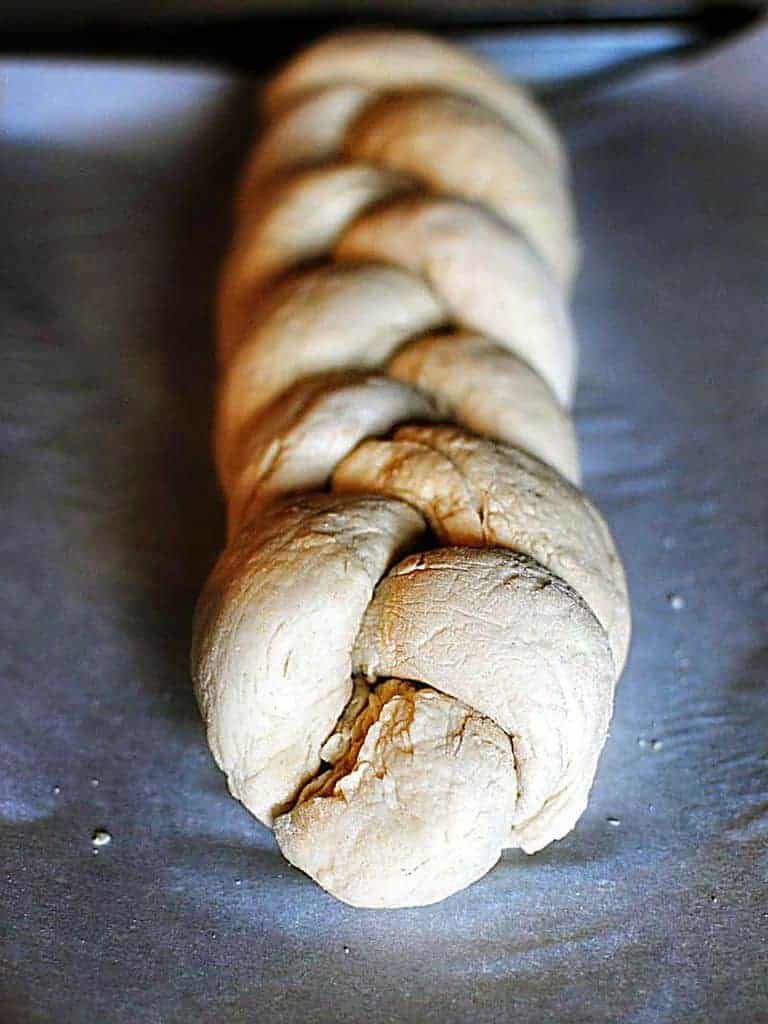
As long as the temple existed, the altar atoned for a person. Now, each person’s table atones for them” says the Talmud (Menachot 97). The Talmud here is prescribing a surprising role to eating, and to the home. Redemption happens not despite eating, but through it. The temple is not inherited by the synagogue, but by the home – your dining room table, to be specific. Nowhere is the connection between our tables and the Temple more pronounced then on Shabbat, with meals the focal point of the day (not synagogue…). Obviously, Hallah takes the place of the Lechem haPanim (indeed, Kabbalists would use 12 loaves of challah on Shabbat, just like in the Temple).
Reb Tzadok haCohen of Lublin, the late Hassidic master (died 1900), extrapolates:

The Lechem haPanim was renewed each Shabbat, because the essence of eating in holiness is achieved on Shabbat, as they said in the Talmud and the Midrash and the Zohar: “By keeping Shabbat one is immediately redeemed” – in other words through holy eating everything is rectified, becoming as it was before the brokenness [of the eating from the fruit in Eden] and the harm of the snake. And this is the meaning of “immediately redeemed”. (Pri Tzadik Tu Bishvat)
לחם הפנים בשבת מתחדש, כי עיקר אכילה בקדושה הוא בשבת וזה שאמרו בגמרא (שבת קי"ח ב) ומדרש (שמות רבה כ"ה, י"ב) וזוה"ק (תיקון כ"א) דעל ידי שמירת שבת נגאלין מיד שמתקנים הכל שיהיה כמו קודם קלקול ופגם הנחש ...וזהו מיד נגאלין.

Reb Tzadok’s Shabbat eating is an eating that pervades the entire body. Like the purifying waters of the mikveh, the food rushes through the entire organism, redefining it, bringing it fresh life, resetting our body to the “manufacturer’s settings”. Meir Shalev, in his novel Four Meals describes such an experience:
I couldn’t imagine that food could give such profound and poignant pleasure. Not only my tongue and my palate, but also my throat and my guts and my fingertips sprouted tiny taste buds. The smell filled my nose, saliva flooded my mouth, and even though I was still a child, I knew I would never forget the meal I was eating.  (Meir Shalev, Four Meals, pg. 18)

Reb Tzadok’s Shabbat eating is an eating that is able to “reset” the world, a return to the world of divine and human expectations as they were in Eden, before human weakness was manifested  by the snake. Shabbat eating allows us to return to ourselves the way we imagined ourselves, to our highest aspirations for ourselves. Lechem haPanim is indeed “Show bread” – the bread that shows an ideal image of the world, of ourselves. As we eat it on Friday night, we can again imagine ourselves as our highest selves, and immediately we are redeemed.
And one more thing: Why did the Bread of the Internal never go stale? I know only one kind of bread that doesn’t go stale – wonderbread, the height of the artificial. Indeed, artificial dreams, like artificial bread, seem to stay fresh and shiny. Real bread, like deep dreams and aspirations, become stale ever so quickly, as we become jaded and cynical. Hence the image of an “Internal Bread” that will never go stale is so necessary. On Shabbat we are invited to reach back to the “Bread of the Inside”, that place inside that never goes stale, where dreams are “as warm as when they were baked.” And this is perhaps why the bread can never be taken off the golden table of our psyche: if we were ever to live in a world where the ever-fresh bread did not exist, our life too would become as stale as week old bread.

Shabbat Shalom,
Mishael

Rabbi Mishael Zion | Bronfman Fellowships | Emor | Text and the City