Showing posts with label Genesis. Show all posts

Thursday, October 24, 2013

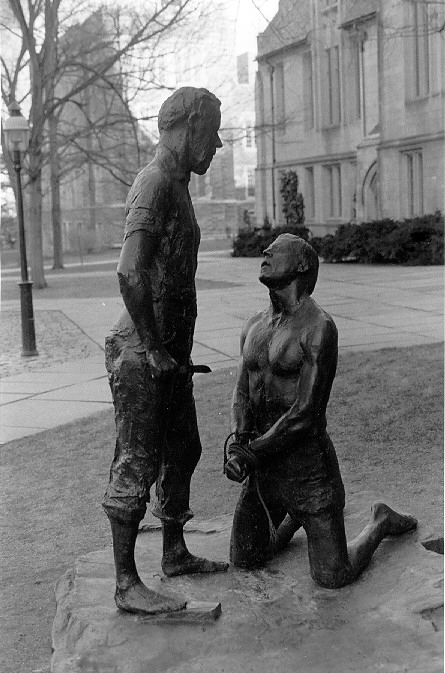
“Giving up the Art of Laughter?”: Isaac, After the Akeidah


George Segal, Avraham offering his son Isaac, 1973
After the Akeidah. Is there such a thing? “No poetry after Auschwitz,” said Adorno - would Isaac agree?
This week’s Torah portion focuses on the finding of a wife for Isaac, but he is barely mentioned in the process, inviting us to consider Isaac’s life after the Akeidah.
The truth is that Isaac is the blandest of the Patriarchs. The Biblical spotlight barely focuses on him. He seems to always play the supporting cast to his father/wife/neighbors/twin sons. Someone else is sent to find him a wife, he spends his life digging his father’s wells only to have them blocked or stolen by others, and finally gets tricked by his son in his old age.  Perhaps Adorno is right, and Issac’s life is to be understood as the poetry-less life of a survivor of patricide (interestingly, his son Jacob describes God as “the God of Avraham and the Fear of Isaac” Gen 31:42).
Elie Wiesel however presents a different take, focusing on the things which we might take for granted about Isaac:
 Isaac survived. He had no choice. He had to make something of his memories, his experience, in order to force us to hope. Isaac represents defiance. He defied death. Logically, he should have pursued oblivion. Instead he settled on his land, married, had children, refusing to let fate turn him into a bitter man.
He felt neither hatred nor anger toward his contemporaries who did not share his experience. On the contrary, he liked them and showed concern for their well-being. After Moriah, he devoted his life and his right to immortality to the defense of his people. He will be entitled to say anything he likes to God, ask anything of Him.
Because he suffered? No. Suffering confers no privileges. Rather Isaac knew how to transform his suffering into prayer and love rather than into rancor and malediction. This is what gives him rights and powers no other man possesses.
And as the first survivor, he had to teach us, the future survivors of Jewish history, that it is possible to suffer and despair an entire lifetime and still not give up the art of laughter.  (Elie Wiesel, Messengers of God.  pg 92)

Isaac’s calling, according to Wiesel’s auto-biographical projection, is in transforming the most traumatic moment in his life into a resource for his community. He is to become an advocate on behalf of those who suffer in silence. Wiesel’s point highlights one of the rare moments in which Isaac takes agency. When Rebecca is barren, he prays on her behalf, turning “his suffering into prayer and love rather than into rancor and malediction”:
And Isaac entreated God in presence of his wife, because she was barren;
and God let Himself be entreated of him, and Rebekah his wife conceived. (Gen 25:21)
וַיֶּעְתַּר יִצְחָק לַיי לְנֹכַח אִשְׁתּוֹ, כִּי עֲקָרָה הִוא; וַיֵּעָתֶר לוֹ יי, וַתַּהַר רִבְקָה אִשְׁתּוֹ.
(בראשית כה:כא)

Isaac’s behavior puts his heroic father to shame. How come Avraham, in all those years of Sarah’s barrenness, never “entreated God in presence of his wife”? Returning to Wiesel’s words above, I wonder if this is in some way connected to the “Art of Laughter”, and the connection between knowing how to pray and knowing how to laugh. Prayer is indeed laughable, in the deepest sense. Both come across as the most primal of human responses, irrational and yet totally real. They are both actions that embody full presence-in-the-moment, seemingly not representing action, but actually offering a third way. Laughter and Prayer break the evolutionary psychologist’s dichotomy of “Fight or Flight”. Avraham knew how to fight, and he know how to run. But, perhaps, he didn’t know how to laugh.

Shabbat Shalom,
Mishael

P.S. Yehuda Amichai completely disagrees with Elie Wiesel in this poem:

Avraham had three sons, not just two
Avraham had three sons: Yishmael Yitzchak and Yivkeh.
No one has ever heard of Yivkeh, for he was the youngest
And the most beloved, who was sacrificed on Har Hamoriah.
Yishmael was saved by his mother, Hagar; Yitzchak saved by the angel.
But Yivkeh was not saved by anyone. When he was young,
His father would call him, in love, Yivkeh, Yivk, little Yevk
My sweetie. But he sacrificed him in the Akedah.
And in the Torah it says a ram, but it was Yivkeh.
Yishmael never again heard about God, the rest of his life.
Yitzchak never again laughed, the rest of his life.
And Sarah only laughed once, and never again.
Avraham had three sons,
Yishma, Yitzchak, Yivkeh
Yishmael, Yitzchakel, Yivke-el.
Yehuda Amichai 


Wednesday, October 2, 2013

Shutdown, Slimdown, Babylon: The Dangers of One Language


“Now all the land was of one language and one set-of-words.” (Gen 11:1)
וַיְהִי כָל-הָאָרֶץ שָׂפָה אֶחָת וּדְבָרִים אֲחָדִים

Rarely do current events illuminate a Biblical text as poignantly as the poker game currently unfolding in  our
Fox News coverage
nation’s capital does. The story of the Tower of Babel, which we reread in this week’s Torah portion, is receiving a contemporary reinterpretation on the National Mall. Yet in this post-modern theatrical revival, there are not one, but two towers. On either side of Washington, two severe ideological-political towers have risen, and each side has locked itself in, speaking to itself in “one language and one set-of-words”. Each side has its own blogs, newspapers, TV channels, court jesters, and of course its own “set-of-words” to describe the unfolding reality (the “Tea Party Shutdown” vs. the “Slimdown”). Hearing each side tell the story, one can barely correlate it to the tale being told in the other language.
Granted, some might feel that only one side is stuck in an insular Tower of Babel. But what the current shutdown illuminates so powerfully in our Biblical text is that “the sin” at Babel was not the content of their actions or the values they held. It wasn’t that the people at Babel were idolaters, or rebelling against God, as many commentators hold. Rather, the problem was in their unity and uniformity. Rabbi Naphtali Zvi Berlin, the Netziv, in his commentary on the Torah “HaAmek Davar”, makes this point:

“Now all the land was of one language and one set-of-words” – God did not rise against them because of the content of their beliefs, but because they had only one set-of-words – regardless of their content. For their “set-of-words” became an obstacle to them, as they decided to terminate anyone who did not think like them. (Netziv, Ha’amek Davar Genesis 11:1)

'ויהי כל הארץ שפה אחת ודברים אחדים' – לא משום הדברים התעורר הקב"ה, כי אם בשביל שהיו אחדים, יהיו מה שיהיו... היו 'דברים אחדים' שביניהם לרועץ, שהחליטו להרוג את מי שלא יחשוב כדעתם.

Unity and agreement – desirable in their own right - became insular. Their air-tight logic turned into a suffocating collectivity. Within the confines of their own language, the people of Babel could no longer understand any alternative but their own. So taken by their “one set of words”, they could no longer tolerate anything foreign to it.
Much has been made recently of that fact that America has become a place where people of similar opinions
live, work, worship, study, marry and even shop in separate “lands”, receiving their news from “information siloes” in which they hear only what they already think to be true. Have we become a series of Babels ourselves? When is the moment when shared language becomes insularity, when solidarity becomes impermeability, when talking to those who share our values becomes solipsism?
I don’t have a solution to the intellectual and cultural divides in Washington. I also happen to believe that one side here is deeply correct while the other has made a grave error of judgment, one side is stuck in a tower in my opinion, the other is perhaps inching towards it. But I believe one lesson worth learning this week is that we need constant safeguards from becoming siloed in the “land of one language and one set-of-words”, and we need to ensure that our opponents don’t silo themselves off either.
The Bible offers a very strange solution to the challenge of “one-speak”:

“Let us go down and there let us baffle their language,
So that no man will understand the language of his neighbor.”
So God scattered them from these over the face of all the earth,
And they had to stop building the city.
Therefore its name was called Babble.

It is the tale of the invention of foreign languages, the creation of bafflement. Learning to decipher a foreign language, exposing oneself to the incomprehensible, recognizing that one person’s Babble is someone else’s common sense, are crucial safeguards against the destructive insularity of Babel. I do not apologize for the fact that I understand myself and the world through the boundaries of my own language, but I know that there are others languages out there, and that makes a world of difference. If we’re ever going to build some towers together, we’re going to have to make room for a whole lot of affable bafflement, otherwise we’ll never get very far.

Shabbat Shalom,
Mishael

p.s. Inspired by the Tower of Babble, and in the spirit of the ridiculousness of some of our leaders, I have been playing  Bob Dylan’s 1961 rendition of a “foreign song I learned in Utah”.


Now all the land was of one language and one set-of-words.
And it was when they migrated to the east that they found a valley in the land of Shinar and settled there.
They said, each man to his neighbor:
Come-now! Let us bake bricks and let us burn them well-burnt!
So for them brick-stone was like building-stone, and raw-bitument was for them like red-mortar.
And they said:
“Come-now! Let us build ourselves a city and a tower,
its top in the heavens,
And let us make ourselves a name,
Lest we be scattered over the face of all the earth!”

But God came down to look over the city and the tower
that the humans were building, and said:
“Here, they are one people with one language for them all,
and this is merely the first of their doings –
Now there will be no barrier for them in all that they scheme to do!
Come-now! Let us go down and there let us baffle their language,
So that no man will understand the language of his neighbor.”

So God scattered them from these over the face of all the earth,
And they had to stop building the city.
Therefore its name was called Bavel/Babble,
For there God baffled the language of all the earth-folk,
And from there, God scattered them over the face of the earth.
(Genesis 11:1-9)


א וַיְהִי כָל-הָאָרֶץ, שָׂפָה אֶחָת, וּדְבָרִים, אֲחָדִים ב וַיְהִי, בְּנָסְעָם מִקֶּדֶם; וַיִּמְצְאוּ בִקְעָה בְּאֶרֶץ שִׁנְעָר, וַיֵּשְׁבוּ שָׁם ג וַיֹּאמְרוּ אִישׁ אֶל-רֵעֵהוּ, הָבָה נִלְבְּנָה לְבֵנִים, וְנִשְׂרְפָה, לִשְׂרֵפָה; וַתְּהִי לָהֶם הַלְּבֵנָה, לְאָבֶן, וְהַחֵמָר, הָיָה לָהֶם לַחֹמֶר ד וַיֹּאמְרוּ הָבָה נִבְנֶה-לָּנוּ עִיר, וּמִגְדָּל וְרֹאשׁוֹ בַשָּׁמַיִם, וְנַעֲשֶׂה-לָּנוּ, שֵׁם:  פֶּן-נָפוּץ, עַל-פְּנֵי כָל-הָאָרֶץ ה וַיֵּרֶד ה’, לִרְאֹת אֶת-הָעִיר וְאֶת-הַמִּגְדָּל, אֲשֶׁר בָּנוּ, בְּנֵי הָאָדָם ו וַיֹּאמֶר ה’, הֵן עַם אֶחָד וְשָׂפָה אַחַת לְכֻלָּם, וְזֶה, הַחִלָּם לַעֲשׂוֹת; וְעַתָּה לֹא-יִבָּצֵר מֵהֶם, כֹּל אֲשֶׁר יָזְמוּ לַעֲשׂוֹת ז הָבָה, נֵרְדָה, וְנָבְלָה שָׁם, שְׂפָתָם--אֲשֶׁר לֹא יִשְׁמְעוּ, אִישׁ שְׂפַת רֵעֵהוּ ח וַיָּפֶץ ה’ אֹתָם מִשָּׁם, עַל-פְּנֵי כָל-הָאָרֶץ; וַיַּחְדְּלוּ, לִבְנֹת הָעִיר ט עַל-כֵּן קָרָא שְׁמָהּ, בָּבֶל, כִּי-שָׁם בָּלַל ה’, שְׂפַת כָּל-הָאָרֶץ; וּמִשָּׁם הֱפִיצָם ה’, עַל-פְּנֵי כָּל-הָאָרֶץ.
בראשית יא