Thursday, May 30, 2013

Tourism as Sin: The 12 Spies and the idea of Tzitzit


One of modernity’s most interesting creatures is the tourist. The pre-modern world had pilgrims, traders and vagabonds, but the idea of people travelling the world simply of their own accord is totally new. Tourism has since become not only a staple of affluent modern life, but also one of the most apt metaphors for a way of being in the world. Being a tourist is about the ability to be “in all places, but of none of them.” In small doses this can be a fantastic experience, but as a way of life I find it quite troubling.
This week’s parasha is bookended by the notion of tourism – in the tale of the 12 spies (“go tour the land”) and in the commandment to wear Tzitzit (“and you shall not tour after your hearts and eyes”). It’s a good opportunity to explore what we know of tourism and to re-read the “tourism texts” of our parsha in that light.
Parashat “Shlach” tells the tragic tale of the 12 spies sent to “tour the land”, performing reconnaissance on behalf of the Israelites. But the spies declare the land “unattainable”, creating a mass rebellion against God and Moshe.  A period of 40 years of wandering ensues. The Mishna claims that the sin of those twelve tourists was the original cause for Tisha b’Av – a national day of grieving our failures. Reams have been written about the sin of the spies actually was, and yet I wonder if their tale can be retold as a “sin of Tourism.”
Scholars distinguish between two types of Tourist experiences: modern and post-modern. Modern tourists seek out authentic cultures – be they ancient or contemporary – on a quest fed by their own desire for authenticity. “Tourism is the secular modern substitute for the pre-modern religious experience” claims sociologist Erik Cohen. The predicament of the authenticity-seeking tourist is that at best the tourist finds a “staged authenticity,” for his very presence undermines the authenticity of the natives. Indeed, the rigorous tourist seeks to break through the “front” presented to her, to the “back” – the real life at the visited destination (enter a million stories about how “we really saw the real thing…”). Yet it is mostly a self-defeating exercise, since that “authentic core” is exactly what cannot be experienced by an outsider.
Post-modern tourism, on the other hand, is described as unburdened by the search for authenticity or originality. Playfulness and entertainment are at the center, regardless of whether the experience is staged or not. It is a studied stance which does not privilege the authentic over the inauthentic. The only criterion is an aesthetic “experiential” one. It is this type of tourism which has turned from a stance into a way of life, as described best by Zygmunt Bauman:
The tourists want to immerse themselves in a strange and bizarre element (a pleasant feeling, a tickling and rejuvenating feeling, life letting oneself by buffeted by sea waves) – on condition, though, that it will not stick to the skin and thus can be shaken off whenever they wish. They choose the elements to jump into according to how strange, but also how innocuous, they are: you recognize the tourist haunts by their blatant, ostentatious oddity, but also by the profusion of safety cushions and well-marked escape routes.
The tourist’s world is fully and exclusively structured by aesthetic criteria (to the detriment of its other, also moral, dimensions…). Tough and harsh realities resistant to aesthetic sculpting do not interfere here. One may say that what the tourist buys, what he pays for, what he demands to be delivered is precisely the right not to be bothered, freedom from any but aesthetic spacing.
The problem is though, that as life itself turns into an extended tourist escapade, as tourist conduct becomes the mode of life and the tourist stance grows into the character, it is less and less clear which one of the visiting places is the home... Homesickness means a dream of belonging; to be, for once, of the place, not merely in… When tourism becomes the mode of life, when the threshold of excitement climbs relentlessly upwards and each new shock must be more shocking than the last one – the possibility of the home-dream ever coming true is as horrifying as the possibility of it never becoming real.  (Zygmunt Bauman, “From Pilgrim to Tourist – or a Short History of Identity”, pg. 29-31)
Returning to our parsha with these insights, I wonder if the Israelites’ fear of entering the land is a fear of leaving the innocuous stance of the tourist. It is a fear of engagement beyond the surface, a fear of taking on responsibility, with all of the dangers and risks involved in such an involved stance. As slaves in Egypt and followers of God in the desert, the Israelites didn’t have to exert responsibility or take on significant risks. They were allowed to be tourists, dreaming of home but also fearing what that would entail. When faced with the real costs and risks of “arrival”, they balk. Their tourism has grown into their character, and they no longer want to relinquish their surface-deep freedom for a home. Perhaps they never knew what such a home was.
Today, with the enormous opportunities to encounter and experience, tourism is no longer an occasional stance but has become a smost attractive way of life. The highest accolades belong to those of chameleon-like abilities, existing “in all places” without being “of any place”. From the lives of the ultra-educated-hyper-mobile-global-professionals to the odyssey year’s confusion of “Girls”, postmodern living can easily lead us into becoming tourists in our own stories.
It is this second idea, not being “of any place” that the spies and their followers are doomed to live the rest of their lives as they wander through the desert for 40 years. But the end of our Parasha suggests a remedy for both being in the world and of the world. Take it as a material commandment or a powerful counter-metaphor, the mitzvah of Tzitzit can be described as the act of “anti-tourism”:
And it shall be unto you for tzitzit, that you may look at them… and that you not go touring after your own heart and your own eyes, after which you use to go astray; in order that you may remember and do all My commandments, and be holy unto your God.
וְהָיָה לָכֶם, לְצִיצִת, וּרְאִיתֶם אֹתוֹ וּזְכַרְתֶּם אֶת כָּל מִצְוֹת יְהוָה, וַעֲשִׂיתֶם אֹתָם; וְלֹא תָתוּרוּ אַחֲרֵי לְבַבְכֶם, וְאַחֲרֵי עֵינֵיכֶם, אֲשֶׁר-אַתֶּם זֹנִים, אַחֲרֵיהֶם. לְמַעַן תִּזְכְּרוּ, וַעֲשִׂיתֶם אֶת-כָּל-מִצְוֹתָי; וִהְיִיתֶם קְדֹשִׁים, לֵאלֹהֵיכֶם.


Tzitzit are a mitzvah of the eyes. Eyes are a funny thing – they never are where we are. They are always beyond - searching, looking, leaving. Eyes are also the first tool of the search for meaning (“Raise your eyes and see – who created all this?” says Isaiah) or philosophy (Maimonides’ first commandment in the Code is to “look”). It is the move to compassion and empathy, the first base for the creation of meaningful bonds. But the eyes first must be grounded, they must be “of a place” before they take us to a new place.
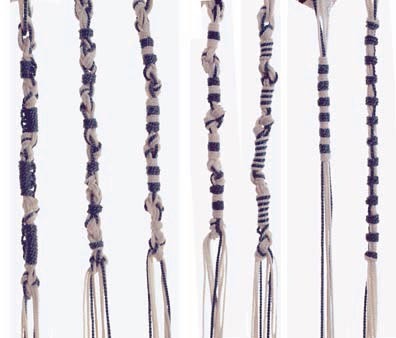
Read in this frame, Tzitzit is about creating a portable home, encasing ourselves in a flexible film which enables the heart and the eyes to emanate from a place of self-knowledge, and from there to take in the world. But Tzitzit are not just about self-knowledge, they are about knowing oneself to be obligated: “and you shall see the tzitzit, and you shall remember the mitzvot, your incumbent obligations – and you shall preform them”.
More than anything else, obligation is the opposite of tourism. Rather than understood as a protective armor against a seductive world, tzitzit might be a way to engage with the world out of a frame of obligation and belonging, a grounding point for all future journeys.
Shabbat Shalom.

Tuesday, May 14, 2013

Thessaloniki, 1533 and the Bridesmaids: The Origins of Tikkun Leil Shavuot

Rabbi Mishael Zion | Bronfman Fellowships | Text and the City | Shavuot 2013
When the companions gathered together on that night in order to prepare [letaken] the adornments of the Bride, so that she may be ready to appear before the King with her jewels and adornments as is proper, Rabbi Shimon would say:
“Happy is the share of the Companions when the King asks his Bride: “Who has prepared your beautiful adornments? Who has made your crown so radiant, and done all your preparation?” For there is no one in the entire world who knows how to arrange the adornments of the Bride like the Companions. Happy is their share in this world, happy is their share in the world to come!”

(Zohar III: 97b-98b)
Thessaloniki, best site for a 16th century Tikkun 

We celebrate Torah twice in the Jewish year. On Simchat Torah we dance with a closed scroll, ignoring the content and instead celebrating the  fact that God gave us this amazing present called Torah. But the Torah is about partnership – at least in the Rabbinic version of the story – so it is only fitting that there is a night when we focus on the fact that this divine text was delivered into human hands. Enter Shavuot, Chag Matan Torah, the holiday of the Giving of the Torah, where we unroll the scroll and study its contents. On this night, we don’t just hold the Torah, we celebrate being partners in creating it.
The Zohar takes this idea one step further, introducing the idea of the nocturnal Tikkun (Maimonides, for example, didn’t celebrate Shavuot in this way at all). On a Tikkun Leil Shavuot, one begins with reading highlights of the Written Torah, but it is the Torah sebe’al Peh, the Torah-of-the Human-Mouth, which the Zohar mandates to be studied on Shavuot In this frame, Shavuot celebrates the Human side of the God-Torah-Humanity partnership. The ultimate receiving of the Torah is turning the words of Torah into Jewels and adornments:

Rabbi Shimon would sit and study Torah all night, on the night when the bride was to be united with her husband. For we have learned that the bridesmaids are needed in the bride's palace on that night, as she prepares for her meeting on the morrow with her husband under the bridal canopy. They need to be with her all that night and rejoice with her, preparing the jewels with which she is adorned, studying Torah – from the Humash to the Prophets, and from the Prophets to the Writings. Then they should study Torah of the Mouth, the midrashic and mystical interpretations of the verses, for these are her adornments and her finery.
And she enters with her maidens and stands above their heads, and she is adorned by them, and rejoices with them throughout the night. And on the morrow she does not enter the bridal canopy without them, and they are the ones called “the sons of the bridal canopy.”
When she enters the bridal canopy the Holy One, blessed be He, inquires after those birdesmaids, and blesses them, and crowns them with the bridal crowns.
Blessed is their portion. (Zohar I:8a) 
Like Cinderella’s fairies, the students of Torah spend their time weaving and adorning the Bride all night, delicately piecing together hiddushei Torah in an attempt to prepare for the great union of the morning. The Zohar’s metaphor is a totally different way of thinking about learning Torah, imbued with a desire for the aesthetic, the delicate personal touch of a jewler, the erotic love of friendship. Judaism is a jewelry workshop, not a museum…
One of the most striking aspects of the Zohar’s culture, as described in our short excerpt, is that spirituality happens within a circle of companions, a havurah, preferably of 10 participants. This idea inspired many other havurot, most notably in Tsfat in the 16th century. One such havurah held a Tikkun Leil Shavuot exactly 480 years ago, which – luckily for us – was recorded and copied in numerous books in subsequent years, becoming a landmark for Jewish intellectual history. I share a translation of this account as a gift for Shavuot.
The year is 1533, and one Rabbi Yosef Karo, soon to be of Shulkhan Arukh fame, is living in Thessaloniki. Born in Spain before the expulsion, he is of the generation of Jews who were welcomed by the Ottoman Empire. Karo is known as a Halakhist, but he had a strange hobby: the voice of the Mishna would occasionally appear as an angel from his mouth. On Shavuot night of 1533 he meets up with his friend and fellow mystic, R. Shlomo Alkabetz (soon to be of Lecha Dodi fame). They decide to learn together with some companions, but fail to convince a full minyan to join them. They begin to learn, stringing words
Cover of "Maggid Meisharim", R. Yosef Karo's
book of Mishna revelations
of Torah together, until suddenly, when they begin reciting Oral Torah, the “spirit of the Mishna” speaks up from Karo’s throat. My favorite part of the story comes the next morning, when they meet up with the friends who snubbed them on the first night, and they all cry together for the missed opportunity. Beware my friends, and do not miss Tikkun Leil Shavuot this year. Who knows what might transpire…

Friday, May 10, 2013

How is my Learning? Proposing an Annual Checkup

Rabbi Mishael Zion | Bronfman Fellowships | Text and the City | Shavuot 2013

“The crown of Torah is ready and waiting for all…
all who want are invited to come and take a share”
(Maimonides’ Code, Talmud Torah 3:1)
Here is a proposal for Shavuot beyond the cheesecake. If the High Holidays are the time we inspect our behavior towards others, and Passover the time we take stock of our freedom, then Shavuot, being a celebration of our becoming the “People of the Book”, should be about how we are doing at learning.
Granted, the number of people who maintain a practice of Jewish learning might be slim, but judging by the joy I get from reading articles on exercise and yoga without being much of a practitioner of either, I hope this project can garner some readership. Thus I offer a “Jewish Learning Checkup” for maintaining a healthy and generative learning practice.
This is not a prescriptive brow-beating checkup (we’ll leave that for Yom Kippur), but rather an aspirational diagnostic tool, five categories through which to examine ones practice:
A Jewish Learning Checkup:
1.       Kevah: How can my learning be more than leisure?
2.       Canon: What are the texts I wish to engage with?
3.       Hevruta: Who are the partners challenging me in my journey?
4.       Hiddush: Is my learning generating innovations – in the text and in myself?
5.       Action: Does my learning inspire my actions?
Reflection and context on these five questions follows.

1.       Kevah: Learning as a regular practice
Do not say, I will study when I have the time,
for you may never have the time.”
(Avot 2:4)
How can learning be embedded into an already overstuffed life? How do we prevent it from being relegated to a sporadic leisure activity?
In the age of the Netflix-induced decline of communal cultural campfires, the experience of living in a shared cultural rhythm is even harder to attain in our lives.  This shift is also disruptive to the first floor of Jewish learning which has always been connecting a canon to a communal calendar. This cyclical approach informs everything from the ancient “Parashat haShavua” (weekly Torah portion) to the recent “Daf Yomi” (daily page of Talmud). Text becomes a routinized practice which is weaved into the fabric of the busy life, synchronizing individuals with the pulsating rhythm of a community of learners. It is less about content and more about constant.
Today’s world calls for a learning practice which is a personalized journey, where content and relevance reign supreme, and thankfully so. Yet much can be adopted from the communal calendar approach: Timed benchmarks, even in the smallest of doses, are meaningful – as long as they are regularized. There is enormous power to commitment, whether it is reading “one midrash a week” or “a new Jewish book each year”. It might be a low bar quantitatively, but placing the project of Jewish learning as a fixture of your own story is the significant act here. Celebrating success with a “siyyum” is another great institution: Friends (and smoked fish) are invited to celebrate a learning milestone, adding a healthy social element to a personalized practice, and providing an opportunity for the learner to become a teacher – sharing with others what you’ve learned.
To be sure, knowing one should maintain a practice is a far cry from actually starting one. What makes you go out and do, and then keep it up? Think of your physical exercise practices – what can be learned from those? For the learning you already do –how can you share and celebrate it with others?
2.       Canon: Weaving canonical texts into life
“Turn it and turn it, for everything is in it”.
(Avot 5:26)
I remember the mystified look my daughter gave me when she first saw me kiss a book that fell on the floor. is the practice of deciding that a certain body of texts is of elevated status, and is thus worthy of returning to time and again.  This higher status changes not only the frequency in which the book is read, but also the way in which it is read. Canonized texts are read with a classicist assumption: that one can find personal meaning and relevancy in the text beyond the context in which it was written. The canonized corpus is constantly returned to, creating a language and a collective imagination which shape the learner’s world view. The more regularly we enter the magical kingdom of the text, the more that kingdom becomes the overlay through which we understand our own life and society.
New Canons?
Canonizing
Many think the Jewish canon is a closed one, comprised solely of texts written centuries ago in an imaginary Jewish vacuum. But the Jewish learning canon has always been wider than perceived, and in modern times we have seen an expansion to include Jewish novels and literature, modern poetry, academic scholarship, art and film (in a Bronfman Fellowships learning session, Yehuda Amichai is as canonical as the Talmud…). One could also advocate for a learning practice that highlights shared canons: the American canon, a World Religions or Western Philosophy canon, to name but a few.
Not all texts are worthy of becoming canonical – it is the exclusivity that makes canons work. The important question is: what are the canons I choose to engage with? What are the canons that my community invites me to explore? What are the texts in my life which I elevate, return to them again and asking: how is this text relevant to me now?
3.       Hevruta: Finding partners for adventures in learning
A person who studies alone – is like a lone branch aflame.
A group of friends studying together – are like a bonfire of many branches.
Yossef Gikatila, The Book of Parables, Spain 13th C
The library, taking its cues from the monastery’s scriptorium, is a place of solitary, silent, devotional learning. The Beit Midrash in contrast is loud, noisy, heated and, well, sweaty…. Texts are read aloud, and the more noise and contrasting readings and opinions one can produce – the better. Jewish learning is most generative with partners – be it the havurah/study-circle/book-group, or the hevruta/one-on-one friendship.
Finding the right Hevruta has all complexities of dating, but Hevruta is also a frame of mind. There is a healthy pluralism to learning when it is done in Hevruta. The “Hevruta personality” seeks to be challenged, and demonstrates openness towards other perspectives. In the hands of the right partner, vulnerability and a willingness to be “at risk” in front of the text are be present. Even rejecting a text requires enough understanding of both the text and oneself in order to understand why the learner is deciding to reject it is a classic Hevruta move.
What partners do wish for ourselves in our learning practice – which are already there? How can we turn friends and colleagues into Hevrutas? Am I challenging myself to new horizons that think differently than me?
4.       Hiddush: Innovations in interpreting text and self
 “One cannot have a Beit Midrash without Hiddush (=innovation)”
(Talmud Bavli Hagigah 3a)
One who engages in Jewish learning is always asked “What hiddush was there in the House of Learning today?” (Bavli Hagigah 3a). Regularized canon has an aspect of passivity to it, a repetition by rote of things one has already heard before. Thus Talmudic tradition balances the regularized with the innovative, mandating hiddush: the desire for innovative readings, fresh understandings and surprising turns in the plot. There is a theology at play here: just as God “recreates the world anew each day” – so we recreate and innovate, rejuvenating the text, the learning, and ourselves. Generating Hiddushim is a daunting task, one that requires producing Torah as much as learning Torah.
A learning practice that is committed to Hiddush is also about being committed to personal innovation. In Rabbi Nachman of Breslov’s words, each human life is considered “the greatest hiddush!” When learning and innovating in Torah, we must strive to be innovating in ourselves, recreating ourselves, rediscovering our story and sharing it with the world anew.
What innovative connections can I make through my learning? How do I not only consume Torah, but create it? What is it about myself that I want my learning to help me better understand?
5.       Action: Connecting learning to doing
 “Great is learning which inspires action”
(Bavli Kidushin 40b)
What is at stake in our learning? Not just this or that intellectual attainment or private self-understanding, but the very way we are in the world. This is not just about reading texts as normative authorities which provide answers to specific dilemmas (i.e. Halakha, which has prime place in Jewish learning), but about the way Aggadah – the stories, imagination and language of Jewish texts – inspire our behavior. Our learning should inform our disposition towards others, our political decisions, the way we exercise power and authority at work and in the home, the way we consume and purchase, eat and buy – this is a learning that is worthy of its name.
In mussar circles there is a practice of stepping back from each text learnt and asking “What is this in avodah, in my work?” What can I take from this text to my own life’s work? What question can I be asking to allow my learning to inspire my action?

Thursday, May 2, 2013

The Curse of the Israeli Bob Dylan: Do You Know How to Let Go?

Rabbi Mishael Zion | Bronfman Fellowships | Text and the City | Behar 2013

Meir Ariel, 1942-1999
Curses are much more interesting than blessings. Pick any list of Yiddish curses, and take in the glee of a good juicy curse. A good blessing is deeply soothing, inspiring; but a good curse is a rollicking vision so tangible you can feel the hairs on the back of your neck stand up... This week's Torah portion reflects this ironic reality. The book of Leviticus ends with a hair-raising description of what will happen if we don't follow God's ways. It starts with the possible blessings, but those are quickly forgotten in the wake of the dystopia:
 If by my laws you walk… I will give-forth your rains in their set-time…
I will give peace throughout the land… a sword shall not cross through your land…But if you do not hearken to me… if my laws you spurn… I in turn will do this to you:I will mete out to you – shock, consumption, and fever. you will flee, with no one pursuing you…I will turn your heavens into iron, and your earth like bronze…You will eat, but you will not be satisfied…You will eat the flesh of your sons, the flesh of your daughters, you will eat! And I will scatter you among the nations... So that your land becomes a desolation and your cities become a wasteland.(Leviticus 26)


Reading this list, with the curses outpacing the blessings threefold in volume and resolution, one feels that the medieval triumphalist Christian reading of the vindictive Old Testament God might have something to it... The Ramban, audacious medieval defender of Judaism against Christian claims, senses this and seeks to quickly disarm the sense that the Jewish God is more about fire and brimstone than cool green pastures. It is the weak human attention span that is to blame for this imbalance:


The empty headed who remarked in puzzlement that the curses are more numerous than the blessings, have not told the truth. The blessings are stated as generalizations whereas the curses are stated in detail - in order to frighten the hearers.” 


One aspect of the curses in Leviticus is worth dwelling upon: the retribution God will exact from a
Check out Hazon's Shmitaproject.org
disobedient Israel is not just about an accounting between God and His people, but also about the land. By sinning (in Israel) the land (of Israel) itself requires compensation. It is almost as if there are two independent agencies requiring reparation – God and the land. Our acts have the potential to not only defile ourselves, or our God, but first and foremost our land - and the land will not only puke us out into exile, but also demand a time of purging for itself. This connection to the land is explicitly tied in the curses to a lack of fulfillment of the most important land-based commandment, with which our Torah portion opens this week: the Sabbatical year. At the end of the list of curses, it becomes clear that neglect of this most important mitzva is what is behind it all:
 “And I will scatter you among the nations... So that your land becomes a desolation and your cities become a wasteland. Then the land will find-acceptance regarding its Sabbaths, all the days of the desolation – when you are in the land of your enemies – then the land will enjoy-cessation, and find-acceptance regarding its Sabbaths. All the days of desolation it will enjoy-cessation, since it did not enjoy-cessation during its Sabbaths when you were settled on it.” (Lev 26:32-35)


We live in an age in which the idea of the personification of the land has never been more foreign to us (in our modern, mobile, information technology lives) and yet never been more urgent - both universally with regard to the environment, and particularly with regard to the Land of Israel.
Shmitta, the mitzva to let the land lie fallow, as well as remit all financial debts, is the most challenging, the most contentious of mitzvoth, to this day. It challenges all we take as self-evident about our relationship to food, to ownership, to money. Shmitta literally means to let go, to release. But it is not a Diasporist letting go of all land forever, or a Marxist letting go of individual ownership for all time. It is about creating a cycle of grasping and remitting, in order to understand that the grasping serves a larger purpose.
 
In the spirit of the scathing admonis
hment that our parsha represents, I want to share what is in my opinion the best midrash/prophetic tirade written in modern times. Ironically - but not unsurprisingly - it was written by a secular Israeli poet, a beatnik troubadour with a pretty dismal career. Meir Ariel, the closest thing Israel had to Bob Dylan, knew something about curses – his career knew many declines, and he tragically died from a misidentified flea bite (that’s a curse our parsha somehow overlooked). His love of the land of Israel was seconded only by his ability to criticize and ask sharp questions when all around him were too giddy to see straight (read his bitter satire of Naomi Shemer's “Jerusalem of Gold”, titled “Jerusalem of Steel”). This week, as we mark 46 years to the Six Day War and "Yom Yerushalayim", his challenge rings in my ears.

A disclaimer - Ariel's Hebrew is impossible to translate, because - like Agnon or the Zohar - he effortlessly glides between layers of Hebrew meaning to create an entire Jewish thought symposium in one rock song.

This song – "Midrash Yonati" - can be read as an unabashed criticism of Israel's expansionist visions. Yet it is such a poignant text that many of my most right wing friends play it constantly in their caravans, perhaps as a reminder of what they too are concerned about... I have not found a  satisfactory English translation - a challenge I hope someone picks up soon. I bolded the section on Shmitta below, but will first, like Ariel, end with a positive note, translating the last verse which calls for Jerusalem to show its most beautiful face: “Sound out your voice, for truth and justice in your gates - That's the secret of your charm! That's the beauty in your voice! That charms your Lover!”

"Midrash Yonati" - The Midrash of My Dove / Meir Ariel – a clip by VideoArt-clip by Mira Arad

Halakhic Shmitta - have you already mastered it, that you rush to take just more and more and more land!? In dubious deceit, smacking of theft, under cover of darkness, with rulers’ immunity? Is this redemption -- is this its honor -- Like a thief in the Judean underground? And to whom shall you sell your field on a Shmita year, Or will you perhaps become a Muslim or a Christian for a year? And before whom will you play innocent Seventh after Seventh year, while the ground under you is ravished like a concubine? And who finds favor in this act? Land you take – But offer no Redemption.
Or perhaps your fingertips so tightly tightly tightly tightly tightly clenched - Trained to release? Skilled at letting go? Practiced in remitting? Oh Mama, mama, motherlandOh mama motherland Oh Mama, mama, mother landLand, my land!ad moti (until my death)until when, my land?

Midrash for My Dove
Meir Ariel, 1987

Ask after the heart of Jerusalem
Ask how she fares
Stones in the heart of Jerusalem
The marketplace teems.

Enclothed in deceit and injustice
For the building of the wall
But from behind her veil
Her nakedness – exposed:

She doesn’t seek justice justice,
Doesn’t wish for peace.
For there is no peace without justice,
So why did we end up here?
What was our dream? Will we soon awake?

My dove once again in the clefts of the rock
While the hawk hovers above
And furtively in the cliff, engulfing
a snakes mouth gapes wide.

There – those lands we left behind,
 We are their desire.
Here – these lands around us,
We are their chorus.

That same convoy on the road
Headed to the sea,
The king pursues it, smeared in blood
The desert and its beasts –
After us they are.

How Jerusalem puts on airs
And dances publicly with all
Joins, mingles, rubs herself
On flocks in ecstasy.
Look at her leaders splitting hairs,
None are great or tall,
A mere match would ignite her courtyards -
And every courtyard – a wall.

We’ve already been in the oven
Now we’re in the pan.
Pumped with someone else’s honor,
Crackling a little
Singed at the ends,
Slowly refined.

Why do you so eagerly run
To rub against the blade?
Enough, give the blade a rest too,
Yes, let the blade rest in peace

What about Halakhic Shmitta - have you already mastered it,
that you rush to take just more and more and more land!?
In dubious deceit, smacking of theft, under cover of darkness, with rulers’ immunity?

Is this redemption -- is this its honor --
Like a thief in the Judean underground?
And to whom shall you sell your field on a Shmita year,
Or will you perhaps become a Muslim or a Christian for a year?

And before whom will you play innocent Seventh after Seventh year, while the ground under you is ravished like a concubine?
And who finds favor in this act?
Land you take –
But offer no Redemption.

Or perhaps your fingertips
so tightly tightly tightly tightly tightly clenched -
Trained to release? Skilled at letting go?
Practiced in remitting?

Oh Mama, mama, motherland
Oh mama motherland
Oh Mama, mama, mother land
Land, my land!
ad moti (until my death)
until when, my land?

Stir not up nor awaken
Hate before its time
None can contain it once set free
No rabbi, no minister, no leader.

Someone will arise upon us
As awakening from his dream
We’ll be wiped out,
Us and our spoils,
We shall sink in the abyss

If only you let me see your face
Let me hear your voice
Truth and justice at your gates –
That's the secret of your charm!
That's the beauty in your voice!
That’s pleasing to your Beloved!

Translation adapted from Mira Arad, http://youtu.be/PIt6UJhtayY

מדרש יונתי
מאיר אריאל, 1987

שאלו על לב ירושלים
שאלוה לשלומה
אבנים בלב ירושלים
כיכר השוק הומה.

בשקרים ועוול מתעטפת
לרגל מלאכת החומה
אך מבעד לצעיף נשקפת
עירנו עירומה

שלא רודפת צדק צדק
לא רוצה שלום
כי אין שלום בלי צדק
רק למה באנו הלום?
מה חלמנו חלום? הניקץ היום?

יונתי שוב בחגוי הסלע
מרטט הנץ מעל
ובסתר מדרגה לבלע
נפער פי הנפתל.

זה ארצות הים מאחורינו
אנחנו תשוקתם
זה הארצות שמסביבנו
אנחנו זמרתם.

זו אותה השירה בדרך הפונה לים
דולק בעקבותיה מלך מרוח בדם
מדבר חייתו גם
עלינו הם כולם

איך ירושלים מתייפייפת
ורוקדת ברבים
משתתפת בטח משתפשפת
עוטיה על עדרים.
שאלו בפלפולי שריה
לא שיעור ולא קומה
רק גפרור חסר בחצריה
וכל חצר חומה.

וכבר היינו בתנור
עכשיו על המחבת
מתפמפמים כבוד שכור
מתפצפצים מעט
נשרפים כמעט
נצרפים לאט.

מה לך כל כך נמרץ שלוח
להתגרד על הסכין.
די כבר, תן גם לסכין לנוח
כן רד מהסכין.

שמיטה כהלכה אתה כבר יודע לעשות,
שאתה רץ לקחת עוד ועוד אדמות
בספק מרמה בחשד גזל ב
חסות חשיכה בחסינות מושל

הזו גאולה?
הזה כבודה?
כגנב במחתרת יהודה?


ולמי תמכור את שדך בשנת שמיטה,
או אולי תתאסלם או תתנצר לשנה?

ולפני מי תיתמם שביעית אחר שביעית
בעוד האדמה אשר תחתיך כשפחה נשבית?
בעיניי מי זה מוצא חן?
אדמה אתה לוקח, גאולה לא נותן.


או אלי אצבעותיך הדוקות מאוד מאוד מאוד מאוד מאוד
מאומנות להרפות? מיומנות לשחרר?
מתורגלות לשמוט?


הו מאמא מאמא אדמה
הו מאמא מאמא אדמה
אדמה אדמתי
עד מותי!
אדמה אד מתי?


אל תעוררו ואל תעירו
שנאה שלא תחפץ
רק תצא אותה כבר לא יחזירו
לא רב לא שר לא ש"ץ.
מישהו עוד יתעורר עלינו כמקיץ מחלומו
נימחה אנחנו ושללנו
נשקע בתהומו.

לו רק הראיני את מראיך
השמיעיני קולך
אמת וצדק בשערייך
זה נאווה מראך!
זה ערב קולך!
חן בעיני דודך!