Friday, April 19, 2013

Disneyland and Zion: Between Main Street and Fantasyland


Rabbi Mishael Zion | Bronfman Fellowships | Text and the City | Kedoshim 2013

Hollywood (of the 20’s and 30’s) was a community of Utopians: Genteel utopians on the right who envisioned a brave new world of decent upright, upper-middle-class Americans; and starry-eyed utopians on the left who envisioned a world of compassionate, morally lathered comrades smiting injustice. In the balmy unreality of southern California, one could actually believe in the realization of these images, in the perfection of the world, just as one perfected the world in the movies.
(Neal Gabler, “An Empire of the Own: How the Jews Invented Hollywood”,  pg. 386)


Over Passover break we went on one of the quintessential American pilgrimages: we took our children to Disneyland. Long before the rides, the princesses and the castles, one is struck by Walt Disney’s greatest fantasy: Main Street, USA. This boulevard of frozen-in-time-turn-of-the-previous-century-small-town-America is the epitome of the first Hollywood utopia described by Gabler above, the “genteel …brave new world of decent upright, upper-middle-class Americans.” As the trolley drives down the town road built to look like Walt’s childhood upbringing in the mid-west, one yearns to “return” to this ideal American world.

Yet Main Street’s ode to the normal seems to contradict in full with the European Castle down the street, the world of princesses and fantasy versus the meritocratic sanctification of the mundane.  Disneyland holds an unsolved tension between the desire for a normal, small life on Main street, and the desire to be redeemed from the street by and become aristocratic princess in Sleeping Beauty’s castle. Those two desires: normalcy and chosenness both contradict and feed each other throughout the park and arguably – throughout America.

I pondered this tension between utopia and normalcy, chosenness and egalitarianism as I returned to this week’s Torah portion and its ultimate call: “קדושים תהיו, כי קדוש אני” – “You shall be Holy, for I am Holy” (Leviticus 19:2). This week, as Israel turned 65, I wonder how the creation of the Jewish State engaged the tension of normalcy and holiness.
 
In many ways the early Zionists desired to create their “Main Street, Israel”, a calling to shed the shroud of sacredness and bring Judaism into the secular. The cultural Zionists like Bialik bemoaned the fact that Diasporic Jews don’t write secular epic novels like other nations. The labor Zionists, like AD Gordon, claimed that only an exit from the “kodesh” into an immersion in “chol”, laboring like “all other nations”, would heal us. The political Zionists like Ben Gurion cried that we need to get over our own “chosenness” and realize that all nations are chosen, and we must learn from them all on the path to statecraft (even from America!) - -

If we shall find among the other nations positive acts which we have not done until now – we shall learn from them! We know as citizens of the world that we have much to learn from other nations. We have much to learn from America, from its amazing industrious power… and the freedom to criticize a leader after his election. And if we find among the Czechs something to learn from – we shall learn from them, and fold it into the system of our life and creation, without becoming spiritually enslaved or culturally imperialized by either America or Czechoslovakia. We will learn from the best of all nations – and indeed there is good in all nations.Let each nation believe that he is the chosen people, and indeed all people are chosen, and we shall learn from them all. We shall identify the good and choose it, and identify the evil and stay away. There are lights and shadows in all nations -- including our own.[David Ben Gurion, “Let the Vision Rise”, an address to Labor Party Youth, 2.7.1949]


In the generation after the creation of the state, many secular Israelis embraced this call to normalcy. Most known for this position is AB Yehoshua, who dedicated a collection of essays to writing “In Favor of Normalcy”. For him –as generations of Bronfmanim have heard – Israeliness is the full inheritor of Judaism, healing its neurosis of “otherness” into a vision of normalcy. The desire for normal life becomes the sole utopian vision – for Jews as for all nations.Assaf Inbari, one of Israel’s most interesting up and coming intellectuals, is sharply critical of Yehoshua and his generation – describing them as a “generation of bankruptcy”. They turned secular Israel normalcy into the only goal, and in so doing dropped the ball of Judaism and lost the interest of all those to whom Judaism continued to play a big role. In fact, they lost the interest of the normal Israelis they themselves were trying to create.


A secular kibbutznik himself, Inbari believes that we must embrace both the desire for normalcy and the aspiration to holiness.  In a class to our Israeli Bronfman Fellows this winter, he shared how the early Zionist ideologues believed in both of those ideas. They desired to be “as one of the nations” but also espoused a deeper connection to an authentic Jewish mission. Here, again, is Ben Gurion, this time espousing not the desire for normalcy, but a reconnection to a grand messianic drive:
Israelis… must deepen within them a Jewish consciousness which takes in from the great spiritual inheritance of the Jewish people, the Jewish and universal redemptive vision which our prophets have left us.” [Ben Gurion, Letter to Nathan Rotensterich 9.9.1956]

Or as AD Gordon put it:

If we shall simply follow the lead of others nation, what will be created here will simply be a Hebrew translation of European life, as the Socialist Zionists would like to see here. Such a society will never exist or thrive, for it will not have the greater spirit which energizes, activates, enlivens… Only an independent national creation, an independent life, a place to grow from our own accord – only that has power enough to draw the heart, enliven the nation.[AD Gordon, The Construction of the Nation, 1920]

What AB Yehoshua misses is that when Gordon called for a return to labor, Avodah, he was calling Judaism to enter the secular, but without letting go of the fact that in Rabbinic Hebrew, the term “Avodah” refers to the worship in the temple. This is the power – and explosiveness – of Israel, the ability to speak in both normal and holy languages in the same word. It is a taking a page from the Baal Shem Tov’s idea of worshipping God within the secular – “in all your ways you shall worship him”. It is being a princess while working at the store on Main street.

This combination of holy and secular, of ultimate meaning and total mundaness can be dangerous. But just as much as I fear the ability of the Holy to become a blind fundamentalism, I fear the ease in which “normal” life becomes a vapid, thin existence. Within Israeli and American culture we have both of these extremes, as we probably each do in our own personal stories. This week’s parasha is a call to return to the sources of Holiness in our life and society, just as much as this week’s events are a calling to remember the importance of the normal. May we walk this line with grace.

Shabbat Shalom,
Mishael

p.s. Unpacking Disneyland and the two visions of Hollywood – the liberal vs. the conservative one, is still busying us in America. Walking down Disney’s fabricated Main Street, USA, you can’t help but realize that behind the façade of small, local businesses stands one mega-store run by an international corporation... For a classical cultural criticism of this site see Jean Baudrillard’s unpacking of Disneyland as a “hypereality”.


Friday, April 12, 2013

Israel at 65: Celebrating Is Not Enough


Rabbi Mishael Zion | Bronfman Fellowships | Text and the City |
Originally Published in The Jewish Week

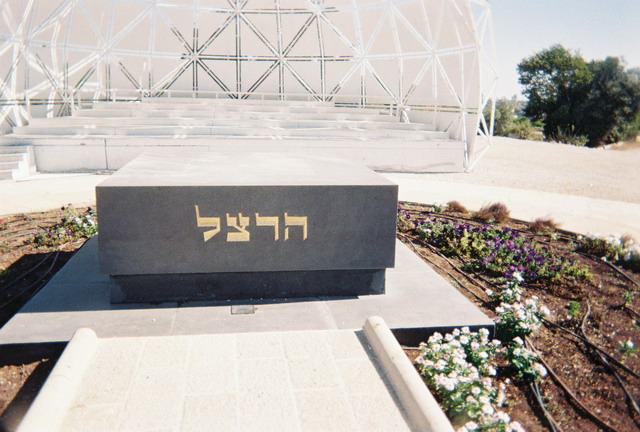
All eyes were on President Obama in Israel last month as he visited Mount Herzl and Yad Vashem. Watching the moving images of the president visiting the graves of Rabin and Herzl, and the adjacent Holocaust memorial, I wondered how aware he was of the fact that the mountain he was on has a very deliberate architecture: At the mountain’s apex rests Herzl’s grave, surrounded by the graves of Israel’s past leaders.
Walk down the slopes and you are in Israel’s national military cemetery. Follow the path further down and you’ve arrived at Yad Vashem. Below the memorial, at the bottom of the mountain, is the “Valley of the Communities,” representing the diaspora Jewish communities destroyed in the Holocaust.
When President Obama walked across this mountain, from Yad Vashem to Mt. Herzl, he was climbing the contours of an ideology embedded into the mountainside: Jewish history has worked its way from the depths of exiled communities doomed to destruction, through the flames of anti-Semitic hatred, up past the children of the nation who gave the ultimate sacrifice, and onwards to the top, where Herzl’s visionary dream is enshrined in black marble: an autonomous Jewish state.
This week in the Israeli calendar tells the same linear story, using not only sacred space but also sacred time: There are seven days between Yom HaShoah and Yom Ha’Atzmaut. It is as if the entire country sits shiva, mourning the tragedy of the Holocaust, then rises to be comforted by the existence of the State of Israel. While the pairing of the Holocaust and Israeli independence has its historical problems, for me it remains a powerful narrative, one that has imprinted itself in my own family history.
Yet Mt. Herzl’s narrative is also an insufficient one, for there — at celebrations of our independence — the conversation unfortunately stops (usually with a good BBQ and a pound of hummus). For years Israelis avoided a serious conversation about what we actually wanted to do with the Jewish state now that it exists. As we re-live that sacred timeline again this week, moving from memory of the Holocaust to celebrating 65 years of Israel’s existence, it is time to say: arriving at Mount Herzl is not enough.
Sixty-five years in, Israel still lacks a constitution and a clear social contract for the Jewish identity of the country. Sixty-five years in, Israel still avoids having a deeper conversation about the role of the two groups that don’t fit into Mount Herzl’s narrative: Jews who live outside Israel and Israeli citizens who are not Jews. Sixty-five years in, we can no longer be sustained merely by the fumes of our own existence, or by the fumes of those who threaten us — as powerful as those realities are. We must have a painful conversation not only about our borders with our neighbors, but about the identity of the home we build together — this is the Zionist calling of our times.
The good news is that Israelis are doing exactly that. The social protests of the summer of 2011 seemed to call an end to the age where every Israeli tribe — haredim, settlers, Tel Avivians — simply does what is best for itself. The new Knesset has brought in fresh political parties that were elected to have a wide conversation about service, education and economics, and about what a secular state does with its religious and cultural inheritance. Hopefully these parties can outgrow the old Israeli tribal politics and stop disenfranchising the easy targets — ultra-Orthodox Jews or Arab citizens of Israel — as has happened so far. Sixty-five years in, Israelis are pushing to get out of the shallow crisis management mode and into a truly inclusive “grand debate”: What is it that we want Israel to be about?
And it is time American Jews engage seriously in this conversation as well. Israel’s friends and allies often get caught up in celebrating the state’s existence and fretting about its external challenges, but lose patience and nuance when it comes to suggesting a vision for what Israel should actually be about. American Jews need to do two things at once: jump into the debate with their own values and visions, while remembering that the Judaism that is right for America is not necessarily what’s right for Israelis.
How exciting would it be if the Salute to Israel Parade in New York would be not just a show of support, 
but also a wide discussion of visions for the Jewish state. How fitting would it be if the week of Yom Ha’Atzmaut would be a time in which American Jews educate themselves on Israel’s challenges and opportunities. Of course we would quickly discover — as Israelis do when having this conversation — that we disagree on what that vision might be. And that discovery would seem to interrupt the superficial unity of the moment. However, this is “Jewish unity” we’re talking about, one that becomes stronger when each of us voices our own opinion while listening to those of others. From its earliest days, Zionism has been a vigorous debate between competing visions, voiced both from Israel and from abroad. While the internal vision for the Jewish state is not an issue for the American president to opine on, it is very much a debate for American Jews to take part in.
Sixty-five years in, something big is happening in Israel, which is finally taking us beyond Mt. Herzl. It is time to for American Jews to turn up the heat and join the conversation.

Tuesday, April 9, 2013

Mount Herzl is Not Enough: The Next Israel Conversation


Published in honor of Yom haZikaron 2012

One. The Mountain of Memory
Jerusalem has not one, but two holy mountains: The Temple Mount in the east, and Har Herzl in the west. Har Herzl, or Har haZikaron, “the Mountain of Memory” has a very deliberate architecture:
On its highest point rests Herzl’s grave. It is surrounded by the graves of Israel’s presidents, prime ministers and leaders. On the slopes of the mountain is the national graveyard for fallen soldiers. Follow the path down the mountain to the west, and you’ve arrived at Yad VaShem, Israel’s Holocaust museum. Take the winding road down from the Yad VaShem museum, and you are at the bottom of the mountain in the “Valley of the Communities,” representing the exilic communities of the Diaspora that were destroyed in the Holocaust.
Topography is used to tell a story, embedding an ideology in the mountainside. When you hike this mountain, you are climbing the contours of an argument: from the depths of exilic reality, doomed to destruction, through the flames of anti-Semitic hatred, up past the sons and daughters of the nation who gave the ultimate sacrifice, and onwards to the top, where a visionary’s dream is enshrined in black marble: an autonomous Jewish state.

Two. Israel’s Holy Week
Herzl's grave at the top of Mt. Herzl
There are moments when the Jewish calendar opens the faceless ticking of time to reveal a beating heart at its center.  Secular life barely uses time in such a way – this approach is normally left to the religious and their holy times. But in Israel, the secular state created a “civil religion” with its own High Holy Days. Israel’s “Yamim Noraim” fall this week, the seven days betweenYom HaShoah, the Holocaust Memorial Day commemorated last Thursday, and Yom haZikaron and Yom HaAtzmaut, Israel’s eerie pair of Memorial for Fallen soldiers, which at nightfall becomes the Day of Independence, to be celebrated this Thursday.
While the way these days flow into each other was a kind of fluke of history, they create a powerful statement. There are seven days between Yom haShoah and Yom haAtzmaut, as if the entire country sits shiva, mourning the loss of the Holocaust, and then arises to be comforted by the existence of the State of Israel. Add Passover to the mix two weeks before, and you have a full ideology, as Prof. Don Handelman has shown, one that is often evoked in the speeches given by Israel’s President and Prime Minister on these days. As Israel’s Prime Minister, Levi Eshkol, put it in 1964:
"Holocaust memorial day falls between the ancient Festival of Freedom and the modern day of Israel’s Independence. The annals of our people are enfolded between these two events. With our exodus from the Egyptian bondage, we own our ancient freedom; now, with our ascent from the depths of the Holocaust, we live once again as an independent nation." (Prime Minister Levi Eshkol, Holocaust day Address, 1964)
Yom haZikaron begins with a blaring siren which is sounded across Israel at exactly 8pm, piercing walls and hearts, and a nation stands still to commemorate those who fell in its honor. It is the most powerful time to be in Israel’s public space: stores close, communities come together, and the radio plays the saddest Israeli songs. The nation turns from a collection of citizens into a family that together remembers their fallen.
Like the mountain, the chronology makes a powerful argument: the tragedy of the Holocaust has taught us that Jews need their own state in order to be free and to be safe. In order to achieve that independence we must be willing to make the ultimate sacrifice—our sons and daughters in exchange for independence. Only after that lesson has been engrained, can we celebrate our independence.
Three. Fissures
Of course, in reality, this clean narrative is riddled with question marks:
Is the Holocaust really to be owned and subsumed by the State of Israel? Zionism existed before the Holocaust and is more than simply a response to anti-Semitism. Perhaps the Shoah should not become a point in an ideological argument, but a historical memory that belongs to humanity as much as to one group of victims.
Yom haZikaron claims to turn the nation into a family, but soldiers of minorities struggle with the Jewish face of this day, and the country is increasingly facing the fact that a diminishing demographic is doing the work while Ultra Orthodox and Secular elites skip out.
Yom haZikaron opening ceremony at the Kotel, 2012
Yom haAtzmaut is challenged both on the left, by anti-Zionist Israelis who seek to release  Israel from its ethnocentric bias, and on the right, by religious groups, betrayed by the evacuation from Gaza, who see not the 1948 secular declaration of independence, but the 1967 unification of Jerusalem and greater Israel, as the high point of the narrative. This ideology subsumes Herzl’s mountain back under the Temple Mount.
Some feel threatened by these dissenting voices, which find issue with the argument put forward by the Memorial Mountain. I’d rather see in this the natural and healthy debates of a country that is trying to do many things at once. These voices should not be pushed out, but rather seriously engaged. We need to have this debate together, and the calendar and topography must be used to further this discourse.
Four. 50 Days
The timeline of Passover-Yom haShoah-Yom haZikaron-Yom haAtzamut needs to be extended to include one other holiday: Shavuot, the anniversary of the Jewish people coming together to become part of a covenant. The secular Zionist calendar loved Passover, renaming it the Festival of Freedom, but had no patience for the rabbinic Shavuot, the festival of Torah and its exilic progeny, Halakha. In the early days of the State, Shavuot was returned to its Biblical agricultural roots as a celebration of first fruits. Now that agriculture got sidelined in Israel all that is left for most Israelis is a consumerist celebration of dairy products.
But to me, Shavuot represents the day in which we get to discuss and decide what we want to do with our previously achieved freedom and independence. Sefirat haOmer, the quirky ritual of counting 50 days from Passover to Shavuot, represents exactly that process: the move from Freedom to Covenant, from childhood dreams to mature decision making.
Israeli independence, and the celebration of its achievement, is important. But it is not sufficient. We need to continue the process, counting up the days to the time where we discuss, agree and sign a covenant of what we – Israel’s stakeholders: citizens and diaspora Jews - want Israel’s existence to be about. Har Herzl is not enough, we must find Israel’s new Mt. Sinai so that this exciting project can take flight.

Rabbi Mishael Zion | Bronfman Fellowships | Tazria-Metzora / Yom haAtzmaut 2012 | Text and the City

Thursday, March 14, 2013

What Story Will You Tell? Preparing for the Seder


From "A Night to Remember Haggadah"
illustration by Michel Kichka
Cereal has become a scarce commodity in our home. All traces of pasta long since devoured. The pantry is being purged of Hametz, with a carefully timed consumption plan to ensure that by the time Passover rolls around, our home is clear of Hametz. This marks the entrance into the pre-Passover marathon of the next ten days.  Yet while the preparations for Pesach are often clouded by fumes of chametz, frantic menu making and fretful “who are the guests” conversations, all those issues must be brushed aside for a far more important question: What story are we going to tell? If we don’t ask ourselves that question, we might as well not have a Seder at all.
The central mitzvah of Passover night is story telling – the commandment to re-tell the story of our people. We tell it through eating matza, through singing songs, through asking questions. We tell it in our body language and in our rituals. We tell it to our children, we hear it from our parents, but even if we don’t have either of those present, we must tell it to ourselves.
Stories, however, cannot be simply recited. Simply opening up a Haggadah and letting someone else tell the story to us would be the greatest missed opportunity in the world. In order to truly fulfill the biblical commandment of “והגדת לבנך” – “and you shall tell your children” – we have to stop being  consumers of the Passover story, rather become its creators. This is the secret of a good storyteller – she never just repeats by rote, but rather re-creates the tale in a way relevant to her audience each time anew. This is why families often create their own haggadot. As a Haggadah salesman myself, you'd think homemade Haggadot are my greatest competition. Instead, they are the goal of the whole project…  (In this the "debate" between communitarianists and liberals reaches a possible resolution: Seder is a call for creative self authorship of communal narratives).
In any case, faced with the challenge of storytelling, the stressfulness of who the guests will be and what we will cook pales in comparison.
What story will I tell this year? Which story do I need to hear this year? I am still mulling over these questions. My daughters are now 6 and 4, the prime age for storytelling at a certain level. To increase the challenge, we've decided to have a Seder without our parents and extended family, challenging us – the two young parents – to step up to the plate, and allowing our children and the story they should hear to be at the center. But what that story will be, I have yet to figure out.
With 10 days to go, and still unclear about the content of the story for this year, I procrastinate by reminding myself of the importance of the endeavor. I thus offer three quotes on the importance of storytelling in our time: one Yiddish author, one Catholic philosopher, and one rabbi.
Happy Storytelling,
Mishael

Tomorrow, Today Will be a Story | IB Singer
From "A Night to Remember Haggadah"
illustration by Michel Kichka
When a day passes, it is no longer there. What remains of it? Nothing more than a story. If stories weren’t told or books weren’t written, humans would live like the beasts, only for the day.
Reb Zebulun said, “Today we live, but by tomorrow - today will be a story. The whole world, all human life, is one long story.”
Children are as puzzled by passing time as grownups. What happens to a day once it is gone? Where are all our yesterdays with their joys and sorrows? To the storyteller yesterday is still here as are the years and the decades gone by. In stories time does not vanish. Neither do people and animals. For the writer and his readers, all creatures go on living forever. What happened long ago is still present.
I.B. Singer, from Preface to Zlateh the Goat, 1966


A Story-Telling Animal | Alasdair MacIntyre
From "A Night to Remember Haggadah"
illustration by Michel Kichka
Man is in his actions and practices, as well as in his fictions, is essentially a story-telling animal, a teller of stories that aspire to truth. But the key question for men is not about their own authorship; I can only answer the question ‘What am I to do?’ if I can answer the prior question ’Of what story or stories do I find myself a part?’ We enter human society, that is, with one or more imputed characters-roles into which we have been drafted -and we have to learn what they are in order to be able to understand how others respond to us and how our responses to them are apt to be construed. It is through hearing stories of wicked stepmothers, good but misguided kings, wolves that suckle twin boys […] that children learn or mislearn both what a child and what a parent is, what the cast of characters may be in the drama into which they have been born and what the ways of the world are. Deprive children of stories and you leave them unscripted, anxious stutterers in their actions as in their words. Hence there is no way to give us an understanding of any society, including our own, except through the stock of stories which constitute its initial dramatic resources. The telling of stories has a key part in educating us into the virtues."
Alasdair MacIntyre, After Virtue (1981:216 , Notre Dame)

A Legacy of Luggage | David Hartman
A primary source for evil according to Jewish tradition is the loss of memory. Those who do not build upon their mem­ory and who are frightened and ashamed of their past may man­ifest hostility towards others because their sense of worth and dignity is derived only by manipulation and control of others.
The poor people who prevail through difficult struggles to attain wealth, and then block out the memory of their past become harsh taskmasters. "Self-made men" can be sensitive to others only when they are unashamed to talk about their former destitution. If they cannot bear the thought of their former poverty, they will act with cruelty to those who remind I hem of their former degradation. In recalling Egypt, the Jews are exhorted to remember that they were once slaves. Rather than deny it, they are to incorpo­rate that slavery into their consciousness. Thus, love the stranger because you too were outcasts in Egypt; have regard for the poor because you too were once servants; care for the oppressed because you too were persecuted; aid the crushed because you know what it means to face extermination; be cautious with power because you have suffered the perversions of another's might.
The role of parents is to develop in the identity of the child a sense of history, a temporal consciousness, an empathy for a whole world of experience that was not theirs. Whether these memories are relevant and meaningful, and how the child will live by them, are different issues. The mother's and father's task is not to decide how the children will use their memories. Their obligation is to see to it that the child does not enter into the future without a past.
From "A Night to Remember Haggadah"
illustration by Michel Kichka
Judaism imposes a vital task on the parents: to tell the children their people's story. What the child does with this past, no parent can decree. Parents provide their children with luggage. Whether the child will open up the suitcases and use their contents is beyond the reach of parents. They have no right to enter the child's future. Parents must aim at instilling memories that haunt the child an entire lifetime; their bequest is a weight of generations, an awareness that one's biography began with Abraham and Sarah.
David Hartman | “Memory and Values,” Leader’s Guide: A Different Night, p. 75


Tuesday, March 12, 2013

Wicked: 20th Century Lessons from the Art of the Wicked Child


Otto Geismar, Germany 1927
Republishing from 2012: A Meditation on the Wicked Child

Of the four children of the Haggadah, the Rasha, the Wicked one, stands out. His siblings are all described through intellectual categories: Wise, Simple, Doesn’t know to ask. The Wicked child alone is stamped with an ethical category. It is perhaps not incidental that the Wicked one also gets the most sympathy from modern readers. A liberal education is loath to label someone as wicked simply for questioning. Is the Haggadah making an important argument for the limits on questioning, or is it perhaps not the content of the question but rather the tone, the body language, and the stereotype already constructed in the parent’s head, which sways the interpretation in a certain way?
This is where the Art of the Four Children is the best commentary. The illustrator is forced to fill in the gaps, informing us not only of body language, but also of historical setting and ideological backdrop. But before art, let’s turn to the text:

רָשָׁע מָה הוּא אוֹמֵר?
"מָה הָעֲבֹדָה הַזֹּאת לָכֶם?"
לָכֶם - וְלֹא לוֹ.
וּלְפִי שֶׁהוֹצִיא אֶת עַצְמוֹ מִן הַכְּלָל כָּפַר בְּעִקָּר.
וְאַף אַתָּה הַקְהֵה אֶת שִנָּיו וֶאֱמֹר לוֹ:
"בַּעֲבוּר זֶה עָשָׂה יי לִי בְּצֵאתִי מִמִּצְרָיִם."
לִי - וְלֹא לוֹ. אִילּוּ הָיָה שָׁם, לֹא הָיָה נִגְאָל.
The Wicked One, what does he say?
“What does this type of practice mean to you?”
‘To you’, and not to him.
And by divorcing himself from the community, he denies the very essence. Moreover, you must blunt the bite of his words, by telling him:
“For this purpose the Lord labored on my behalf by taking me out of Egypt”
For me, and not for him.
Had he been there, he would stand undelivered.

Dick Codor's Marx Bros 4Sons
What is the wickedness of this child? The Haggadah editorializes: ‘To you’ and not to ‘him’ - the Wicked child sees no part for himself in the practices or values of his parents. He is questioning the premise of solidarity with family/people and this – says the Haggadah – is the sharpest of bites. The parent scorns his Wicked child: You would not have been liberated! The response echoes a midrash which claims that only 20% of the Israelites left Egypt during the Exodus. The other 80%, of little faith (in Moses and his God? in the idea of a better place?), decided to stay and become rank-and-file Egyptians. This child would have stayed with that majority, claims the Haggadah, not with the crazy matzah-eating fugitive slaves.
Reading this text in light of the Jewish-European 20th Century, though, forces one to revisit the role of the Rasha, for the 20th century was the century of “Wicked” Children, who left the Egypt of their parents. As Yuri Slezkine writes, there were not two , but three great Jewish migrations in the twentieth century from the Pale of Settlement, each one a rebellious liberation movement that was based on a “patricide” of the traditional Jewish home: Nationalism (the Zionist migration to Palestine), Liberalism (the Capitalist/Professionalist migration to America), and Communism (the Political Socialist migration to Moscow). Each migration had its own ideology, its own vision of a Promised Land, its own theory of how to liberate Jewish existence from being "strangers in Egypt": The Universalistic Socialist Promised Land of early Communism, in which Jews flourished; the Capitalist vision of nontribal statehood, a “nation of strangers held together by a common celebration of separateness (individualism) and rootlessness (immigration).” And the Zionist "indigenous land" where strangers could turn into natives.

Artistic renderings of the Four Children throughout that century constantly wrestle with these three promised lands, at time portraying the new Zionist/Capitalist/Communist Jew as Wise or Wicked according to the views of the illustrator:

In early American Haggadot, the wicked child was the “assimilated American”, who leaves the paths of his parents in favor of a path of prosperity and acceptance by the wider community. The ways of old are relevant “To you, and not to him”. This seemingly one-sided story is told by one of the earliest American haggadot, published in 1879 in Chicago:

Chicago Haggadah, 1879
The Wicked child, his body arrogantly deflecting away from the table, is dressed in modern clothes, smoking (as any civilized gentleman would do), and pontificating, waving his hand dismissively at his traditional parents.
But this illustration is far from embracing of the Wise child and deeply ambivalent about his parents, who seem frozen in time next to their dynamic “Americaner” son. The wise son is dressed like his parents, but is lost to the world, engrossed in his book. Most significantly, the two younger siblings are eyeing their younger brother enviously, imitating the way he waves his hand about. One can only imagine how many families in the Mid-West and on the East coast, saw this scene unfold at their own seder tables. The reader is left with a question whether the sympathies of the artist lay with the glassy eyed father or with the flamboyant son.

Lola, Leon David Israel, 1920

30 years later, in the Lower East Side, the scene has changed significantly. From the proud German Jewish Americans of industrial Chicago, we turn to the shmutzy alleys of the Eastern European immigrants of Spring Street.  In a Haggadah from 1920 illustrated by Yiddish cartoonist Lola the wicked child is a boxer. This is a tribute both to the golden days of Jewish boxing (like Battling Levinsky, lightweight champion of the world 1916-1920), and to Max Nordau’s 1900 call for a Muscular Judaism. Our buff boxer seems willing to take on his dorky brother (who by now has no problem dressing like a modern American, but is still engrossed in his book). Again, one wonders if the Jewish boxer is the villain or the hero.


Siegmund Forst, USA 1959
The presence of Jewish Communism is also well attested in haggadot. Communist Haggadot abounded in the 30’s and 40’s, including my favorite modern re-working of the Avadim Hayeenu, “We Were Slaves” Haggadah passage:
We were slaves to Capital, until the October Revolution [of 1917] "redeemed us with a strong hand" from the land of slavery. If it weren't for the October Revolution, then we and our children and our children's children would still be slaves to Capital. Today the revolution is only here, next year = a world revolution. (The Red Haggadah, 1927)
For Moscow’s Jewish intelligentsia, and for many American Jews, being a communist was being the wise child, liberated not only from Capital but also from Ethnicity. Yet many American Haggadahs of the 50’s and 60’s save the Wicked child’s place to the communist cousin. In one portrayal, the Wicked child is a  “flaming commie,” threatening to set fire to the world. In another, he the is spitting image of Leon Trotsky, holding an enormous ax poised at splitting through the Ten Commandments (meanwhile the assimilated American Jew has been demoted to the Simple child, in his flannel shirt and racing results).

Tzvi Livni, Tel Aviv 1955
Finally, we come to the third, and smallest, Jewish European exodus of the early 20th century: Zionism. In Zionist renderings of the four children, like the one by Tzvi Livni here from 1952, the muscular Jew is the Wise one, holding a (closed) book, wearing a Zionist youth movement shirt, ready for action. The Wicked child is the financier-speculator in the shirt and tie, dollar bills creeping out of his shirt (Israeli prime ministers only started wearing ties in the 1990’s, a sure sign of the decline of ideological Israel…). This Wicked child points at the work of Zionist inhabitation of the land, and says: “What is this avodah, this practice, to you?” The religious Jew is not missing, though. Usually given primacy of place as the Wise child, for Secular Zionists the ultra-orthodox are the “child who does not know how to ask.”
But many Secular Zionists took pride in being the Wicked child of the Haggadah. A rebellious secular movement, Zionism incorporated the criticism of the wicked child: “What does this old Jewish practice, which leaves you emasculated in your decrepit eastern European exile, mean to you?”
The 1927 Shomer HaTza’ir anthem captures this spirit exactly:

The Song of the Son
David Shimoni, 1927 Anthem of the Shomer HaTzair

Do not listen son, to the morality of your father
And to the teachings of your mother pay no heed
For father’s morals are “line on line”
And mother’s Torah is “Slowly, slowly”
But the Spring storm says but one:
Listen, man, to the song of the son!

To the song of the son, and the great-grand-son,
Which comes from beyond a deep fog…
And break out a new path, leaving the
Way which the father took,
For why shall you sin towards the generation,
A future full of illumination?

On a cold night, a night of Adar,
Whilst the mother sleeps, the father is down,
Will you hear, the song of the wind abounds,
The song of the son, a song of joy and battle?
On a cold night, a night of Adar,
Hearken, how the spring sings…


The original Hebrew text of the anthem above was copied in the font usually reserved for Torah scrolls, and was carried in the pockets of movement members like a religious amulet. Secular Zionists sought to replace the tradition, to rewrite the holy Scriptures, replacing the tunes of traditionalism with the song of rebellion.

At the end of the day, these three Jewish liberation movements, which might have been classified as “Wicked” in their times, force us to re-evaluate our relationship to rebelliousness in Modern Jewry.
For me, as a parent, a Zionist and a Jew, the lesson of the Zionist child rings in my ear: that rebellion should not be interpreted as betrayal, and that we must be very humble in our assumptions about what is right for the next generation. At least one, if not two of the 20th century rebellious Jewish liberation movements succeeded in creating a vibrant Jewish culture and eventually a better world for all. We must seek out the rebellious questions of the next generation, cultivate them, all the while supporting that they, like those rebellious Zionists of old, continue to use the language and stories of their inheritance as they march into a new spring.

Pesach Sameach!
Mishael

p.s. I can’t resist one more 4 children, the 21st century rendition of the illustrator of my own Haggadah, A Night to Remember: The Haggadah of Contemporary Voices, Michel Kichka. For a comprehensive essay  on the art of the Four Children.
Michel Kichka, Israel 2006


Rabbi Mishael Zion | Bronfman Fellowships | Tzav / Pesach 2012 | Text and the City

Thursday, February 28, 2013

On Idolatry: What is Our Golden Calf?

Rabbi Mishael Zion Bronfman Fellowships | Text and the City | Ki Tisa 2013

The principal crime of the human race, the highest guilt charged upon the world, the whole procuring cause of judgment, is idolatry.  The idolater is likewise a murderer. Do you inquire whom he has slain? If it contributes ought to the aggravation of the indictment, no stranger nor personal enemy, but his own self. By what snares? Those of his error. By what weapon? The offence done to God. By how many blows? As many as are his idolatries.
[“On Idolatry”, Tertullian, 2nd Century Church father, Carthage

This week’s Parasha, Ki Tisa, with its Golden Calf and broken tablets, tells the tale of the biggest mistake the Jewish people ever made. Not too long after the wedding at Sinai is over, God finds his new wife, Israel, in bed with an adulterer –and a cow no less… In one of the fieriest moments in the Torah, Moses, having come down the mountain and broken the tablets, takes the hoofed object of the betrayal, melts it down, and forces the Jewish people to drink its molten gold. Through this scene, and many others, the Torah identifies its most serious enemy: Idolatry.
As a child I could never understand the draw of idolatry. Judging from the stories told in kindergarten, it seemed quite stupid. Why would people be drawn to worshipping “stones and trees”? If even Abraham could see that the statues in his father’s store were powerless – how could the rest of the world be so stupid? The idea that we, crazy Jews, were the only ones who saw the light on this issue was in itself suspicious. Years later I read that the rabbis agreed with me to some extent: “The desire to worship idols has passed from this world – it has now been given to all transgressions” they say in Sanhedrin 75a. Many pagans in late antiquity might agree (see “Did the Greeks Believe Their Myths?”). In the post-pagan world, where idolatry became the shared enemy of Judaism, Christianity and Islam, you might expect idolatry to stop acting as a useful category altogether.
Unsurprisingly, idolatry never died. The history of Idolatry is fascinating and ever relevant, for while it is no longer about idols and statuettes, it is every bit about defining what God and religion mean. Changing conceptions of God create different ideas about what is idolatry. Or to put it differently - the notion of the alien, or false, god, shapes the concept of GodAs Moshe Halbertal and Avishai Margalit put it in their monograph, “Idolatry” –
The prohibition against idolatry is the thick wall that constitutes the city of God, leaving the strange gods outside and marking the community of the faithful. [However] the location of that dividing wall is not fixed, rather opposing conceptions of idolatry define the outskirts of the city of God differently. It is essential for the self-definitions of non-pagans to share the general concept of idolatry, but they do not share a specific definition of what is idolatry and what is wrong with it. [Idolatry, pg. 236]
It is by knowing what idolatry is that we know what Judaism is, what a relationship with God is. It is by knowing what the act of “slaying one’s own self” as Tertullian describes it, that one knows what it is to live a meaningful life. Which leads me to the question I’ll be pondering this Shabbat: What are today’s idolatries? What is it that we would identify today as “the principal crime of the human race, the highest guilt charged upon the world”? What is our golden calf?
In the 19th and 20th century, idolatry was alive and well. Marx saw idolatry in fetishism, the fetishizing of money and price. The religious literature of the 1950’s saw idolatry in totalitarianism and fascism, the 1960’s saw idolatry in the military-industrial complex or mainstream bourgeois culture. For others it is liberalism and political correctness which is the great idolatry, and fetishizing of equality while losing the compass of the sacred. Common to all of these is the identification of group-think of various kinds as idolatry. What kind of God does this make for then? Obviously, the God of individual autonomous thought… (how American!)
Who today are contenders for the crown of idolatry? The destruction of the environment (or its conservation?), our addiction to consumerism or careerism? Our loss of sacredness, deification of the individual (or of the community?)? Or simply a life “lived without meaning”?
Some prophets have identified that “the principal crime of the human race” can be found in religion itself. If this is a cry against any kind of organized religion in the name of science – count me out. But if it a cry against fundamentalism and religiously-sanctioned-violence – I’m in. If we are not to throw out the baby with the bathwater, I would frame this in the following Jewish terms: the greatest idolatry of our times is the taking of God’s name in vain to justify un-godly actions, a hillul hashem.
I am sure there are others that I missed. There are more idols out there to identify. However – regardless of definition – it is the category of idolatry that I want to hold on to:that internal criticism that I might be deifying something that is not. If we are to live the life of service to our values, we must identify what the idolatrous golden calves which distract us are. We must identify them in order to melt them down in the fire of our passions, to bring upon us a better world.

כל המודה בעבודה זרה--כפר בכל התורה כולה, ובכל הנביאים, ובכל מה שנצטוו הנביאים, מאדם עד סוף העולם:  שנאמר "מן היום אשר ציווה ה', והלאה—לדורותיכם". וכל הכופר בעבודה זרה, מודה בכל התורה כולה; והיא עיקר כל המצוות, כולן.
רמבם הל' עבודה זרה ב:ז