Thursday, April 2, 2015

“And Here the Child Asks”: Passover and the Pillars of Jewish Parenting

Tonight is the most important night of the Jewish year. It isn’t Yom Kippur, Holocaust memorial day or Hanukah. And it doesn’t take place in your Synagogue, or in Israel, or anywhere where you aren’t. It is Seder night, and it takes place in your dining room.
Seder night has a radical claim at its heart: that before Judaism is a religion, or a people, or a culture – it is a story; one that is told in a family context, in the first person. It is a story that is to be questioned, but also experienced, celebrated, dramatized and eaten. It is a story that is turned from narrative into nomos, from fable into values and practices – as we open the door for others. And it takes place at home, around your table.
If we were to choose a National Jewish Parenting Day, it would be Seder night (both of them!). Already in the Torah, before the Israelites even left Egypt, God and Moses fast forward to the quintessential moment of parenting: “And when your children asks you, 'What does this ceremony mean to you?” (Exodus 12:26). This scenario is repeated three times, which – with the addition of one unasked question – will become the basis of the midrash about Four children at the Seder table. And it is upn this basis that the Rabbis turned Passover from a Temple based holiday – one which takes place there, away from home – to a home-made holiday, which always begins right here.
Passover Night puts into focus the two pillars of Jewish parenting: Calendar and Table. Nothing new here, it might be trite (“we’re all wise, we all know the story”), and yet I find it worth repeating: Calendar and Table are the two vehicles through which Jewish parenting takes place. And they both begin at the home, not with the outsourcing institutions of Jewish education we’ve become so dependent on.
Calendar. The Jewish story is first of all conveyed through the calendar, and that has remained its strongest suit to this day. Families who do not shape their lives around the daily observances and commandments of Halakha, nevertheless tie their family life to the Jewish calendar. Stories are thus woven into the temporal rhythm of the family, like birthdays that come around whether we like it or not. Awkward rituals containing memories demanding to be told, repeated. At its best, the very experience of time reminds us of the story, such that creation itself seems to be repeating the tale: the smells of spring herald the retelling of the Exodus; the darkness of winter beckons for the candles of Hanukkah; the falling leaves invites the reflectivity of Rosh haShana. As Heschel would put it, Judaism builds palaces in time, allowing the stories to reside not only in locations and institutions, but wherever we are. And as Yosef Haim Yerushalmi and Mircea Eliade taught us, what matters in the Jewish calendar is not history but memory. Did the stories “happen”? They exist not in the past, but in mythic time which repeats itself every year. In our modern technological life, as time has become an ever scarcer resource, the power of shaping time around our stories – even just a few times a year - cannot be underestimated, for our children and for ourselves.
Table. “As long as the temple existed – the altar would atone for Israel. Now – a person’s table atones for him.” (Talmud Brachot 55a). Faced with a dislocated Judaism, the Rabbis turned the family table into the central location of Jewish practice, and this continues to be the most powerful invention of Rabbinic Judaism. It was often trumped by the synagogue and the house of study/school, and has recently been sidelined by an era in which Jews sought to reclaim the public sphere and political space. And yet the family table must be the central altar, nothing really rivals it. Around the family table stories are told, conversations are had, and values are put into practice. Tables are always places of rules and mores - Parents try and teach their children how to “behave like human beings” and children challenge and undermine their parent’s authority – but can be so much more than that. Hospitality, that Abrahamic Jewish practice, challenges us to expand our table to people of all stripes and backgrounds.
Passover night is THE night of Jewish table, creating a constitutive moment that can then be translated into year round rituals, as we reconvene on a smaller scale around the table on Friday nights and other holidays. On Seder night, wrote Philo, even as the altar in Jerusalem still stood, “every home takes on the semblance of the Temple and receives its glory, the main course becomes the holy offering, and the participants are invited to purify themselves. Every other day of the year ritual is led by priests – on this night every family become the practitioners of the holy of holies.”
Four Questions, which are One: From Theory into Practice
All this sounds great in theory, and is most challenging in practice. Here are four questions raised in a recent conversation among parents in preparation for Passover. All four are different renditions of the question: Who am I doing this for?
The focus on children and parenting can often make the ritual feel empty and boring to parents. How do we avoid the infantilization of Jewish rituals to the point that grown ups – or teenage children – feel left out?
I’ve become more observant once I had children, creating a strong culture of Jewish calendar and table practices in the absence of much Jewish community around me. The desire to raise my children within the Jewish story becomes stronger the more I see it as a healthy antidote to a vapid consumer culture. Yet each year as I clean I wonder – if I’m mostly doing this for my children, why practice these rituals when they’re not watching? How much effort should I then spend on the pieces that don’t feel like they are particularly relevant - or noticeable – to children? Will they know that that I’m “only doing it for them”?
It’s all well and good to talk about storytelling at the Passover Seder, but the ritual itself allows very little room for it. Between the order of the Haggadah and the desires of the various guests and hosts, and the fact that everyone basically knows the story too, what exactly are we aiming for on this night? Getting the children to focus for a few minutes is hard enough, and rarely happens “in the right moment”, so how do I know that we’ve “performed the ritual as it should be” and be able to relax my grip the rest of the time?
I am not a parent, and have little interest in a night that is so child-oriented, when I am not one. What of all this relates to me?
Like on Seder night, these questions are deeper than any answers one can give. But a good sounding board for these questions can be found in Maimonides’ discussion of Seder Night:
One must make changes on this night, so that the children will see and will be motivated to ask: "Why is this night different from all other nights?" until he replies to them: "This and this occurred; this and this took place."
What changes should be made? He should give them roasted seeds and nuts; the table should be taken away before they eat; matzot should be snatched from each other and the like.
When a person does not have a son, his wife should ask him. If he does not have a wife, [he and a colleague] should ask each other: "Why is this night different?" This applies even if they are all wise. A person who is alone should ask himself: "Why is this night different?" (Maimonides Code, Hametz uMatza 7:3)
וצריך לעשות שינוי בלילה הזה--כדי שיראו הבנים וישאלו ויאמרו, מה נשתנה הלילה הזה מכל הלילות, עד שישיב להם ויאמר להם, כך וכך אירע וכך וכך היה.
וכיצד משנה--מחלק להם קליות ואגוזים, ועוקרים השולחן מלפניהם קודם שיאכלו, וחוטפין מצה זה מיד זה, וכיוצא בדברים האלו.  אין לו בן, אשתו שואלתו; אין לו אישה--שואלין זה את זה מה נשתנה הלילה הזה, ואפילו היו כולן חכמים.  היה לבדו, שואל לעצמו מה נשתנה הלילה הזה.
Maimonides’, based on the Talmud, grounds Passover night in a series of games, surprises and changes – which are all aimed at eliciting spontaneous, real questions from the audience. “Snatching matza” is the afikoman game, “seeds and nuts” are the desserts of old. Give out candy, do strange things – anything to keep this night alive, fun and relevant.
But a moment before Passover night turns into a child-oriented circus, Maimonides pauses to ask: what if the classic imagined audience is not there? What remains of Passover without parenting? “A person who is alone should ask himself: Why is this night different?”
I find the image of a person, sitting along and asking themselves questions on Passover night, to be the most poignant image of ideal parenting. Anything we do with our children, ideally, would be something we would do on our own, for ourselves, if we could. And when we do it with our children, the engine for it should not just be in them – our desires, fears, or hopes for them – but in something in ourselves. This is not about being self-serving, but about integrity, acting from a place of existential grounding, from our best selves. Children sniff it out immediately if it does not emanate from such a place.
Granted, we are rarely our best selves when we are alone in a room. So much of early parenting is trying to regain best practices which we allowed slide during adulthood (clean language, no snacking between meals, limiting screen time, making time for what really matters). In fact, it is far easier to do things for our children and to expect of them the highest behavior – while struggling to reach those bars ourselves. In response Maimonides’ offers an image of parenting as a series of concentric circles – ideally we should be having the same conversations with our children as we have with our spouse, our friends, ourselves. Parenting allows us to put on a mask of our best self, or a mask of an ideal world which we want to give our children – but we must make sure that the mask is never too distant from who we are by ourselves, with our friends and with our spouses. And the relationship should work both ways: the stories we tell our children, the questions they ask of us, must shape who we are as adults as well. In that sense, talking about parenting is just a way of talking about who we want to truly be. Turning that into practice, well for that we need a whole bag of tricks up our sleeve – for our children as for ourselves.
Hag Sameach,
Mishael


Thursday, March 12, 2015

An Amateurs’ Guide to the 2015 Israeli Elections

I don’t usually write about politics, but thought I’d share some thoughts on the upcoming Israeli elections. Hope this is helpful in making sense of what’s going on and looking forward to learning from other voices that see things differently than I…
Mish

An Amateurs’ Guide to the 2015 Israeli Elections | Mishael Zion

Israel is going to the polls on March 17th, for the third time in six years. The campaign began with most Israelis fatigued and cynical, but schisms and unions among Israel’s political parties have energized these elections and offer a poignant glimpse into the changes that Israeli society is experiencing. Much attention is given to Netanyahu’s prospects of becoming prime-minister of Israel for the fourth time, and the enormous energy spent to replace him (check out the videos on this FB page). But the real drama unfolding in Israel’s streets, cafes and living rooms is the dilemma of the undecided. Recent polls have shown that upwards of 20% of the population say they have not yet decided how to cast their vote. Likud and Labor are currently polling neck-and-neck, so it is the number of seats which the small parties will receive that will determine whether Labor’s Isaac Herzog can create a coalition of 60+ Knesset seats, or if Netanyahu will receive the reigns yet again.
Since I know many Americans have a hard time keeping track of Israel’s gazillion-party-system (which is almost as broken as the two-party-system), and in an attempt to justify the many hours I’ve spent reading analysis and watching videos on my facebook feed, I offer four fictional, stereotypical and totally biased narratives highlighting some of the questions Israeli voters are asking themselves. You’ll notice that Iran and the Palestinians, US-Israel relations and ISIS are not the focus here – that already is saying something. At the end of each narrative I’ve provided some of the recent poll numbers. Videos from each party’s campaign with English subtitles can be found here (and here's John Oliver's hilarious recap). Hope this is helpful as the elections unfold in the coming week and look forward to questions and alternate readings…

The Centre-Right: Will the real Begin please stand up?
Aryeh Deri and Moshe Kahlon
I’m your Jerusalem cab driver, Mickey. What’s that? Yes, I was born in Algeria, and I’ll never forget how my father’s honor was denigrated by those anti-religious euro-centric Ben Gurion-ists. The first politician who got my loyalty was Menachem Begin, who spoke to us at eye level, and it’s been Likud straight through ever since. But recently Netanyahu has lost me. All this talk of Iran – well, sure, its important, and he’s the ONLY ONE who is strong against a hostile world – but we’re struggling down here. Bibi talks about a “Start Up Nation” – but we haven’t seen a cent of that. This time I’m thinking of voting for Moshe Kahlon. He’s all that’s left from the Real Likud, the Begin way. He’s a good guy, and his cell phone reform saves us 200 shekel a month. Let him be Minister of the Treasury and lets see if he can do that to 3-4 other industries, that’ll be worth my vote. My wife says we should vote for Shas. Aryeh Deri is back now, and he’s been banging the drums of anti-Mizrachi discrimination – saying he’s the only one who ever did anything for the “transparent” ones in society, emphasizing the “Mahlouf” in his name. Funny, that was my name growing up too, but everyone calls me Mickey. But now they say Kahlon and Shas might join a Labor coalition, maybe it’ll be Bibi after all…
Likud | Binyamin(“Bibi”) Netanyahu, polling at 20-25 seats | Bibi as the National Babysitter
Kulanu | Moshe Kahlon | 7-10 seats | Claiming Begin’s true path
Shas | Aryeh Mahlouf Deri | 7-10 seats | Transparency – Mizrachi Israelis

The Liberal Left: Zionist after all or united with the Arab List?

I guess I’m your classic secular Tel Aviv stereotype, a literary editor at a publishing house, still stinkin’ smolani”, with a long, hissing S, my whole life, but the verbal violence turned physical in the streets of Tel Aviv this summer. It sometimes feels like all my friends have moved to Berlin or Berkeley, and lecture me on how Zionism is passé. Still, the social protests of 2011 brought back some of my faith in this society, and the Meretz Knesset members make me proud with their struggles for women’s rights, LGBT rights, a welfare state. I’ve voted Meretz ever since Rabin was assassinated – still remember crying for him in the square for days – but last elections I voted Hadash, the veteran Arab-Jewish communist party. It was a statement of the inability of the State of Israel to be both Jewish and Democratic – and I know what side of the equation I’m on. But now the Arab parties have all united, and a vote for the exciting new Hadash leaders is also a vote for the ultra-nationalist Palestinian parties and the religious Muslim Movement. If Labor wins, my Meretz vote might find itself supporting a watered-down coalition with haters from the right. But can I vote for transcending the Jewish-Arab divide when half the candidates draw that line from the Arab side?
working on my first novel, and proudly in Israel’s far left wing. I’ve watched this country take a swerve to the right, becoming more “Jewish” then I ever remember it, increasingly dominated by an ethno-centric discourse which casually hates Arabs and recently began to proudly hate Leftists. I’ve been called “
Meretz | Zehava Galon | 4-6 seats | Meretz against voting Labor
United Arab List | Aiman Ouda | 12-15 seats | United Arab List Theme Song

The Religious Right: Jewish Home or All-Together-Now
HaBayit haYehudi: Female leadership
Adi and Yishai Schwartz live in Ranana, met in Bnei Akiva, have 4 kids, and like everyone else they know - are voting for Naftali Bennet’s modern-orthodox “Jewish Home”. Bennet announced that he is no longer apologizing: not apologizing to the world for the so-called Occupation, not apologizing to the Palestinians for their so-called suffering (it’s isn’t suffering when its self-inflicted). But truly he stopped apologizing to the secular Israelis for the fact that religious Jews were late comers to the Zionist endeavor. It is time religious Jews teach something about Zionism to secular Israelis. Even Yishai’s secular partner at the law firm is voting Jewish Home this time. But the Schwartz’s are distraught – their youngest son Nerya came back from Yeshiva and announced that he is voting for the new schismatic party “Yachad”, formed by renegade Ultra-Orthodox “Shas” Mizrachim, far-right religious Zionists and Kahanists. Nerya criticizes Bennet (and by proxy, his parents) of not truly
Ultra Orthodox, Mizrachim and Dati'im: Yachad
listening to Rabbinical authority, of being “light”, aspiring to be like Westernized secular Israelis instead of more like the Torah-true Ultra Orthodox Jews. Ever since his fiancé’s family was evicted from Gush Katif, his faith in the State of Israel being a vehicle of God’s will has imploded. The exuberance felt at the “Yachad” party gatherings is huge – finally ultra orthodox Jews can say they are right-wing and admire Israel’s strength, and right-wing religious Jews can say they admire Haredim. They believe in love (of Jews), unity (with Jews) and solidarity (with Jews, especially religious ones). Who can argue with that?
HaBayit HaYehudi | Naftali Bennet | 10-15 seats | Bennet’s Aplogizing Hipster
Yahad | Eli Yishai | 4-6 seats | Rabbis United

The Centre Left: The Ashkenazim who lost the Country
Yair Lapid and Isaac Buzi Herzog
Eli and Sarit Katz are sick and tired of a political discourse that overlooks their daily needs. Iran shmiran, they have been married 15 years and are still renting in Herzliya, having watched apartment prices soar over the past 8 years. They work hard - he’s in sales, she’s an accounts manager. They own 1.5 cars, have 2.5 children and 0.5 pets. Did I mention that they are Ashkenazi? In the 90’s they voted for Yitzhak Rabin and Ehud Barak, and wanted to believe in peace with the Palestinians, but the second Intifada and the wars with the Hamas in Gaza have made them cynical of talk of “peace”. They believe in a “normal Israel”, one located in Western Europe, not the Middle East, and would happily get rid of the West Bank – its Jewish or Palestinian residents – as long as someone can promise them that flights from Ben Gurion airport will continue unabated. They want to feel there is a future for them and their kids here, one where they can afford to buy a house and make a normal living - so last elections voted for Yair Lapid - whose good looks first charmed them as Israel’s prime-time talk show host. Yair talked about middle class and promised to force Ultra-orthodox Jews to serve in the army and join the workforce. He made good on the promise (sort of), but achieved little else. Now this Herzog kid is gaining steam, and suddenly seems like he can actually push Netanyahu off his seat. Sure, he’s unimpressive at first, but he’s growing on them. It’d be nice to vote for Labor again, and the cadre of politicians in Labor’s list is more impressive than Lapid’s minions. Huh, we’ll have to wait for the last day to really make a call…
Labor / Zionist Camp | Isaac (“Buzi”) Herzog and Tzipi Livni | 20-25 seats | Last minute to save the country
Yesh Atid | Yair Lapid | 10-15 seats | Yair Lapid on tour

This is far from the whole picture (see below), but I hope it’s somewhat helpful.
What’s next? The prime ministership is assigned to the party which can assemble a majority coalition of 61 seats (out of the Knesset’s 120). It is generally assumed the Kahlon, Lapid and Shas will join any coalition, but more parties would prefer a Netanyahu led government. Thus while Labor might receive the largest amount of seats, it might not be able to cobble together the majority needed to make Herzog prime minister. Netanyahu’s Likud has more options, but if it dips below 20 seats, will have a hard time justifying it. Everyone knows there will be a few big surprises when the final results come in Tuesday night. What they will be, and how they will shape Israel’s future – are anyone’s guess.

p.s. Missing from the picture are the Asheknazi Ultra Orthodox (UTJ) party polling at 6-8 seats, and Avigdor Liberman’s party, hit hard by corruption charges but keeping its base of Russian voters at 4-6 seats. Lieberman, Meretz and Yachad are all teetering on the 4-seat-minimum for entrance into the Knesset at all. If any of those don’t pass muster, the coalition picture will change significantly. Finally, was below the 4-seat-minimum, but most fascinating of all, is a party of Ultra Orthodox women who refuse to vote for the Ultra Orthodox parties because they do not give representation to women. A harbinger of the way feminism is changing Israeli society on a daily basies.


Friday, February 20, 2015

Big Data: Law, Randomness and Choice in Esther

Moonshine Adar | Rabbi Mishael Zion | Text and the City | Purim 2015


It’s easy to underestimate the story of Esther. With its burlesque scenes, over-the-top characters and ancient court politics, it can seem uninspiring. Its setting in the child-friendly Purim and its violent ending make it seem juvenile, if not inappropriate. Yet the scroll of Esther is the Biblical book which comes closest to describing our current reality. I am not referring to Iranian plots against the descendants of Mordechai, but rather the attempt to navigate an absurd world, caught between the opposite poles of randomness and law, without divine guidance.
This month’s edition of Moonshine includes two explorations of themes in the Scroll of Esther. As always, while sharing my own thoughts about the text, this is to be read mostly as an invitation to one’s own studying of the text. Esther’s 10 chapters are a quick and fun read - especially if you try JT Waldman’s animated version. Understanding its structure is another good shortcut, as is focusing on chapters 1-7. Scroll down for three questions to ask oneself (or your hevruta) as you study this tale.
Wishing you a joyous month of Adar, a Purim of revelry and – who knows – perhaps even a positive reversal of fate…
Mishael

1: Dat and Data: Between Randomness and Law

Purim is - literally - the celebration of randomness. As the Scroll itself says: “That is why they named these days “Purim” – from the word Pur [=lot]”. In the darkest moment of the scroll, the date for Haman’s malicious plot to exterminate the Jews is determined by a random lot (“pur”). At its brightest moment, the salvation too feels random, not so much a final redemption as much as a temporary political windfall. Indeed, the whole book, with its giddy King, comedic reversals and lack of divine providential voice attempts to make the reader feel like they are living in a reality governed by randomness.
The experience of randomness is magnified by its juxtaposition against the often overlooked theme of the book: Law. Throughout the scroll, though, the word used to describe law is not the Hebrew mishpat or din (Hebrew for justice), but the Persian form – dat or data. The Persian word “dat” made its way into both Biblical Hebrew and European languages. Its uses in our 21st century allow a whole new reading of the story of Esther. In modern Hebrew the word “dat” means not law but religion. In English Data signifies transmittable and storable information, the modern correlate of the Persian imperial dat. More basic than knowledge or wisdom, data is the most basic element, with a promise of objectivity and constancy. Data is a building block upon which a worldview can be built. Today, the ascendant promise of Big Data attempts to turn the seeming randomness of life into immutable containable information. Yet in Shushan data has failed.
As first glance the use of “dat” is so ubiquitous that the impression is that Ahasuerus’ (Xerxes’) kingdomis a bastion of rule and regulation. Historically the Persian empire is regarded as the earliest and most impressive imperial bureaucracy – an efficient legal system spanning from Africa to India. But is quickly becomes clear that dat is an empty signifier. In chapter 1 we are introduced to Ahasuerus’ counsel of wisemen who “know law and justice” (יודעי דת ודין). The King goes through great pains to ensure that his dat is known throughout the kingdom – notice all those horsemen appearing again and again in the story. Haman describes the Jews as “not obeying the dat of the King”, even the virgins are seeped in a regimen of myrrh and perfumes for six months as is the “dat of the women”. At the height of the dramatic reversal the King himself adheres to the immutability of his own laws, as he tells Esther and Mordechai: “A document written in the king’s name and sealed with the king’s signet – cannot be revoked” (Esther 8:8). The rule of dat is complete – and thus revealed in its absurdity. When even the king himself cannot change his own laws – you know that something is horribly wrong. Like a snake biting his own tail, in Ahasuerus’ kingdom the opposite poles of law and randomness have combined into one.

Unlike Data, which seeks to be a representation of what is real in the world, collected and analyzed to create information suitable for making decisions, Dat in Shushan has become an empty signifier, an arrow pointing towards nothing at all. I would contend that this is not just a critique of Shushan’s Laws, or Diasporic Law, but of law as an institution. The scroll is warning us that dat (and by proxy, data) will not contain meaning or truth in themselves. It is what one does with them that makes the difference.
The opposite poles of sheer randomness and insipid law can easily lead one into despair, or more likely – cynicism and passivity. Perhaps this explains Esther’s deep passivity – both during the virginal pageant and in response to Haman’s decree. In fact, her success is due to her malleability and passivity, a survival mechanism that shows itself to be a powerful strategy (Esther “asked for nothing other than what Hegai Keeper of the Women told her to take”; “Esther obeyed the word of Mordechai just as when she was in his ward“ Esther 2:15,20). As opposed to Vashti who tried to take her fate in her own hands – and failed, Esther is determined to ride the wave of randomness and let the chips fall as they may. She has felt the randomness of dat on her own body and happened to triumph. Now in the palace she has resigned herself to passivity and cynicism, hoping that the next stroke of randomness will also work out in her favor.

2: Who is this? Moments of Existential Choice
Yet it is on the backdrop of randomness and law – that the Scroll of Esther focuses again and again on personality. More than any other book, Esther is an in-depth exploration of its characters. Even as they are all stuck between the poles of randomness and law, each character – save Ahasueres himself – is highlighted in exercising their agency. This focus on moments of choice, decision and determination doesn't become irrelevant when faced with randomness and law, but is described as a deep response to it (reminiscent of Viktor Frankel’s response to radical evil and suffering). Each character's moment of choice is juxtaposed against the vapidity of law, dat, in Shushan. Meaning is derived not from dat, but from an existential agency enacted despite of it.
Vashti epitomizes this moment of choice by being the one who says no. She refuses to appear in front of Ahasuerus and the men of Shushan in the middle of their revelry. Elias Bickerman explains that this is in fact an existential moment for Vashti. While concubines would appear at the King’s behest at parties, a queen in the Persian empire would leave before the imbibing began. Being asked to appear “with the royal crown on her head” forced her to fight for who she was – a queen, not a concubine.
Mordechai makes two choices – each one more dangerous than the next – to refuse to bow to Haman, and to practice civil disobedience – flouting of the dat – by appearing in the Court wearing sackcloth and ashes. Haman too seeks to know himself. Despite trying to trap the Jews in the claws of the law, he finds himself doubting his own plan, and wants to hang Modrechai even before the (random) date assigned for killing the Jews. This last flirt against the randomness that he himself unleashed is the cause of his downfall. When this last ruse is discovered by the King (Thanks Harvona!), Haman gets hung on the stake that he himself had prepared for Mordechai. Finally Esther – who in chapter 4 receives a sharp wake up call from Mordechai– decides to go to the King “not according to the law”. Esther is urged and challenged by Mordechai, but she is not described as obeying him, she is not simply replacing one dat with another, as some readers would contend. In fact, once Esther agrees to take on the task of convincing the King, she is the one who dictates the terms and devises the plan, and Mordechai is the one described as “fulfilling the command of Esther”. Choice will trump law, and will triumph.
The only one who never seeks to know himself is the King. Ahasueres does all he can to avoid thinking independently and existentially. He will follow the dat with blinders on and will follow advisers when law offers no remedy. He will never overturn his own decision – for that would require an act of self-negation – which assumes the existence of a self to begin with. The King’s lack of introspection and self-knowledge as a way to avoid
Persian royal ring
any decision making is most evident in his hurry to get rid of the King’s seal, the insignia of decision making, of authority and power, the ring of responsibility. His is the most cynical response of all.
Understanding the functional absence of King Ahaseures puts a greater claim of responsibility on the other characters, as Haman and Mordechai understand well. But it also shines a light on the absence of the other King. God's disappearance from the stage of history denies our characters the ability to claim that they are called by an external force. There are no prophets, no messengers of God (or of Satan), no larger authority. There is plenty of ego, randomness and empty law. The only thing that remains is choice.
We live in a world of everchanging randomness and empty laws, says the Scroll of Esther. Call it Shushan, or diaspora, or post-modernity. What remains meaningful then? Knowing oneself and acting from that place. In our turning Purim into a celebration of the Carnivalesque, dressing up as someone other than ourselves, getting legally drunk while behaving OCD about hearing every word of an ancient scroll - we name the randomness and absurdity of life and law. But we are also called to an existential moment of facing who we really are. Caught between the harshness of data and the randomness of history – it is our existential choices that retain meaning.

3: Three questions for studying Esther:
  1. Notice that some characters are “flat” (Ahasueres, Mordehcai) and others “round” (Haman, Esther); for some characters we are privy to their inner monologue (Haman) and/or emotions (Ahaseures), while others we never encounter their emotions or thoughts (Esther and Mordehcai). Why does the author portray the characters in such a way, and how would the story be told differently by changing these characterizations?
  2. The opening two chapters set up the rest of the story, inviting the reader into the worldview of the story. As Michael Fox writes in his commentary on Esther: “The sensuality [of the virginal pageant], like the burlesque of the opening banquet, softens the mood and puts the reader off-guard, making the coming danger all the more harsh” (pg. 36). What can thus be said about the last three chapters of the book?
  3. The banquets – lining up the banquets allows one to identify the inner structure of the story. What do you make of this lineup:


Dedicated to a theme in the Jewish month, Moonshine is a combination Dvar Torah and springboard for learning in the coming 30 days. Moonshine - in honor of the Hebrew month’s commitment to the lunar cycle, with a hint of distilling fine spirits off the beaten track and - perhaps - intoxication.

Monday, November 24, 2014

Home for the Holidays | Moonshine for the Month of Kislev

Rabbi Mishael Zion | Moonshine Kislev 2014 | Text and the City

Odysseus Returns Home, 8th C BCE
As the weather turns colder, the gaze turns inward. This year’s month of Kislev is bookended by the
two holidays of the hearth and home: Thanksgiving and Hannukah. As myriads travel “home” this week for Thanksgiving, I wonder what makes a home worthy of its name.
I’ve been pondering this question as I’ve found myself moving back with my own family to the same neighborhood in which I grew up. As I walk down the familiar streets of Talpiyot in Southern Jerusalem, I keep wondering: after all these years, does it still feel like home? And more importantly – why do I care? As Viennese philosopher Jean Amery asked it: “How much home does a person need?” Why does this question keep cropping up in my life, even as our ultra-portable wireless lives seemingly allow us to feel at home anywhere in the world?
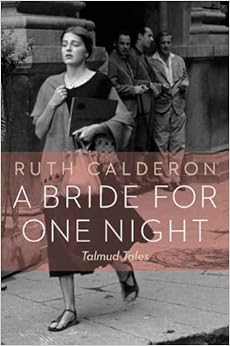
This question also underlies two issues in the headlines. As the United States allows millions of illegal immigrants to functionally call America their home, one wonders defines “home” and who gets to define who is at home and who is “alien”. As Jerusalem is plunged back into violence and a deep lack of personal security, the pat answer of home as a place of refuge and safety is undermined. Strangely, despite the lack of security – the sense of home goes unscathed, as it had in previous periods of fear. Home as safety is an aspirational, but insufficient, answer. I am sent scurrying for other definitions. This is where “A Bride for One Night: Talmudic Tales” by Ruth Calderon found me. In her explorations of Talmudic narratives, she keeps returning to stories focusing on the home, turning it into my recommended book for this stormy month of Kislev.

Rav Hama went and sat for twelve years in the study house. When he planned to return home, he said “I will not do what Ben Hakinai did [and surprise my wife after all these years]”.
He stopped at the local House of Study and sent a letter to his wife.
His son, Oshaya, came and sat before Rav Hama in the House of Study.
Rav Hama did not recognize him.
Oshaya asked him many questions of law. Rav Hama saw that he was a brilliant student, and grew faint, thinking: “If I had stayed here, I could have had a son like this.”
Finally Rav Hama returned home. Oshaya entered behind him.
Rav Hama stood before him, thinking: Surely this student is coming to ask me another question of law.
His wife scolded him: Does a father stand before his child? Do you not recognize your own son?
(Babylonian Talmud Ketubot 62b)

Seemingly a tale of a Rabbi over-zealous in his studies, so lost in his Yeshiva he doesn’t recognize his own progeny, this story easily evokes questions much closer to home. In our zeal for a professional life, committed as we are to the demands of a successful career, do we find ourselves not recognizing our own children as they grow up? 12 years or 100 hour weeks, postponing family until one becomes Rosh Yeshiva/partner/tenured professor, these questions are the clichéd conversations of our generation, and yet balance alludes us. The Home and the House of Study compete – can we have it all?
Rav Hama’s story is another version of the “treasure was at home” tales, as in Paulo Coelho’s The Alchemist or Reb Nachman’s tale of the Treasure under the Bridge. Hama discovers that what he really wanted all along was to have a son learned in Torah, not just to be a scholar himself. That son was waiting for him at home all these years, ignored. Seemingly Hama has attained both of these by the end of the tale – he is a great scholar, and so is his son, Oshaya. He went on Odysseus’ journey and returned victorious. Yet standing awkwardly in the kitchen, father and son face eachother in formality, not intimacy. The journey was a failure if one is unrecognizable in your own home.
This story captures the essence of home as being known, familiar, comfortable, intimate. Home is where the guards can be put down, where you don’t have to explain yourself, where one is understood. Hama lost that familiarity with his son – and thus lost it with himself. “How much home does a person need?” None, says young Hama, leaving for twelve years. Home is where I am least understood, says the adolescent scholar, and goes. Only upon returning home, a decade and more later, does he understand just how much “home” was missed. The journey itself, the process of exile and return might be necessary, but there is a limit: the journey away from home must end before alienation sets in.
One post-script: The missing chapter about Rav Hama is the one I am most curious about. Did he stay home? Did he rebuild his life at home, or did the Yeshiva beckon him to return to his wanderings? The drama of return often gets the headlines, but it is what we build once we’ve returned home that is most challenging. That is the challenge we face today.
May this month of Kislev be a month of regaining home-hood: being understood, feeling known, being safe.
Hodesh Tov,
Mishael

<Sidebar>
Barefoot Talmud
Ruth Calderon, the public face of the new Jewish House of Study, even bringing Jewish text to the Israeli Knesset, had her book of Talmudic stories come out in English this year. Aided by Ilana A Bride for one Night” Calderon takes 17 Talmudic tales, lays them out for the reader to study themselves, then gives her own prose re-telling of the tale before unpacking it more analytically. Rabbi Hama makes an appearance, as do some other Bronfmanim favorites like Resh Lakish, Shimon bar Yohai and Elisha ben Abuyah. It is the best book currently out there to recreate or share with others the joy and passion of Jewish text study.
Kurshan’s (‘95) fantastic translation, Calderon brings the Talmud to life in all their “color, their daring and their drama”. In “


Dedicated to a theme in the Jewish month, Moonshine is a combination Dvar Torah and springboard for learning in the coming 30 days. Moonshine - in honor of the Hebrew month’s commitment to the lunar cycle, with a hint of distilling fine spirits off the beaten track and - perhaps - intoxication. 

Thursday, October 23, 2014

Moonshine Heshvan: Earth, Rain and the Future of Humankind

Rabbi Mishael Zion | Text and the City | Moonshine Heshvan

Dedicated to a theme in the Jewish month, Moonshine is a combination Dvar Torah and springboard for learning in the coming 30 days. Moonshine - in honor of the Hebrew month’s commitment to the lunar cycle, with a hint of distilling fine spirits off the beaten track and - perhaps - intoxication. I’ll be hosting an online text study about the most clicked on texts towards the end of the month. Details forthcoming.

After the intense cycle of Jewish holidays, and with winter peeking around the corner, the mont
h of Heshvan is all about returning to routine, to the simple repetitive tempo of life. No frills - life itself. Menawhile the Torah portions of Heshvan raise the root questions of human existence, wrapped in the stories of a primordial world. From Adam, to Noah, to Abraham, the Torah outlines the complexity – and darkness – of Humanity, and God’s attempts to work with it.
Noah. This year I find myself appreciating the Noah narratives anew thanks to the recent blockbuster commentary by Reb Darren Aronofsky. In studying the Deluge I always focused on God’s vindictiveness or Noah’s disappointing silence, not to mention the cute animals coming two by two. But returning to the tale of the Flood after a bloody summer, Aronofsky’s film puts a painful truth center stage: that Human beings left to their own devices are horrific. It is a Hobbesian tale of the deepest Human moral bankruptcy. Of a world turned from “very good”, to: “Great was humankind’s evildoing on earth, And every form of their heart’s planning, Was only evil all day. Then God was sorry that he had made humankind on earth, And it pained his heart.” (Genesis 6:5-6)
Something about this perspective rings disturbingly true this fall. How do we face Humanity’s murderous and destructive nature? It once seemed that the Enlightenment saved us from our darker demons. Yet the 20th century made us doubt if progress makes the world a more civilized place; now the 21st century brings to the fore those who shun progressiveness, turning the world back to more medieval fundamentals. And that is only in the realm of man to man (and woman?). In the realm of our relationship to the Earth, to Creation, we seem to be failing even more. Is it too late to heal our relationship to nature, to the world, to eachother?

Rain. Ideally, we should live in deep symbiosis with the earth. Humanity’s name, Adam, derives from the Hebrew word for earth, Adamah. Yet we fear the earth, for it reminds us that not only have we come from it – but that in the end, we will return to it. Earth symbolizes our death, our limits, our finitude. When Adam is banished from the garden, the Adamah becomes damned on his account. The word itself – Adamah - leers at Humanity: “Adam–Mah”, says Earth, “Human, what is Human?” Can we redeem our relationship to Adamah?
Heshvan, in which Nature molts its dried leaves and begins its slow process of hibernation and renewal, is also the month of rain. Rain, as opposed to Flood and Deluge, is a sign of blessing. Rain heals the curse of Adam/Adamah, offering a promise of divine collaboration with Humanity in the project called Life on Earth. Rain is about relationship. Just as Noah offers us a “pleasing smell” to the Lord after the Flood, so the rains of Heshvan leave the earth with a “pleasing smell” for us, Humans, to believe in the possibility of renewal and relationship, growth and change.

Great Father. In the move from Adam to Noah and ten generations after that, God mostly hides his face from Humanity. Can’t live with ‘em, can’t kill ‘em. Until a new figure enters the scene. Avram of Ur, who somehow forces God out of His divine hiding place. What did Avram do that got God to seek out a new relationship with him? The Torah never discloses directly, but perhaps it lies in his name: Avram, Av-Ram, Great-Father. For the first time a human being stopped acting like a child, and assumed a parental stance towards the world. God later says as much:“For I have chosen him in order that he teach his children and household to do justice and righteousness” (Gen 18:19), choosing to share with Abraham news of the upcoming destruction of Sodom and Gomorrah. Abraham, unike his ancestor Noah, challenges God. This is the essence of the Abrahamic path – joining God in looking at the world as a parent, stepping up for others and expecting accountability – even from the Creator. Lets hope we see those walking in Abraham’s path today continuing this tradition in the coming month of Heshvan. It’s not too late.

Hodesh Tov,
Mishael

Heshvan Learning Links:
A collection of accessible and provocative Biblical, Rabbinic and Modern texts for the coming 30 days.
“And he called him Noah, saying: May this one comfort us from our sorrow…” (Gen 5:29)
Rereading the biblical story of Noah, the best companions are Nechama Leibowitz’s study into the portion, or Avivah Zorenberg’s deep psychoanalytical reading (and now, Aronofsky’s film). But the simple text is powerful too, especially with Robert Alter’s literary translations. Or, better yet, R. Crumb’s Genesis who illustrates Alter’s full text. Be prepared for lots of nudity.

“Like clouds and wind without rain is one who boasts of gifts never given” (Proverbs 25:14).
What do you do if it doesn’t rain? Most turn to miracle makers and rain dances. The Mishna of Taanit, however, seeks to transform the drama of rain-dancing into a drama of social change. In a gradual process of public and private fasts, sit-ins and protests, the Rabbis delineate a process by which the failure of the elements brings humanity to introspection and self-improvement. Study the first two of Mishna Taanit, noticing how the process employs different spheres of power, public space and liturgy in its vision of social change as the key to climate change.

“Ten Generation From Noah to Abraham” - If the move from the very humanistic and universalistic tales to a narrow chosenness is on your mind, Rabbi Jonathan Sacks’ “Dignity of Difference” continues to be the best exploration of the tension of particularism and universalism in the post-modern, post-industrialist world. To follow in the steps of Abraham in Judaism, Christianity and Islam, read Jon D Levenson’s new “Inheriting Abraham: The Legacy of the Patriarch in Judaism, Christianity, and Islam.”


Moonshine: A Monthly Springboard to Jewish Learning
In the age of the instant, who has time for things that take 30 days?
In the age-old human project of infusing time with meaning, the month is an underappreciated unit. Weeks, years, days all get much focus, but in modern life we mostly ignore the months, Julian or Hebrew. Yet 30 days is an amount of time in which something substantial can take place: a journey, a process, a cycle. As the moon waxes and wanes, we too transform in a way that other time units lack.
After a few years of following the weekly portion, this year I hope to focus on the Hebrew months as a meaning-making unit. The hope for this piece is to be a spring board to a journey, a cycle, inspiring learning, exploring or conversation that can fill the upcoming month. Each installment will consist of a few short explorations, suggesting various reading and follow up. I’d love to hear if you find this useful, or simply file it in your “Read Later” folder for it to rot in gmail oblivion…

Wednesday, October 1, 2014

Beyond Cantors: A Typology of Prayer Leaders for the 21st Century

Rabbi Mishael Zion | Text and the City | Yom Kippur 2014

It was Yom Kippur morning, and my father dragged my sister and I out of bed on a hike across Jerusalem, to learn how to pray. In the basement of an old home in a poor neighborhood, we met a band of Shlomo-Carlebach-infused, Simon-and Garfunkel singing, Hasidic-hand-clapping, irreverent-yet-trembling prayer leaders. Twenty five years later, I am still trying to understand the magic of the prayer that erupted in that damp basement.

After the intense summer the Jewish people have had, and with the world quickly unraveling around us, Yom Kippur will carry an even larger weight than usual this year. There is simply so much to pray for.

Unfortunately the opportunity for real prayer will probably pass most of us by. For too long Jewish prayer in America has been a spectator sport -  Jews sitting in alienating pews, expensive tickets in hand, being lectured on politics or continuity, their souls untapped. No wonder generations have lost interest in the institution of davennen – the Yiddish term for heart-felt, soul-wrenching, raw, prayer.
Yet a new generation has been reclaiming the spiritual value of Yom Kippur. Communities across the country are reinventing, rejuvenating, and rediscovering the sweetness of this intense day. Prayer has become an option again. Indeed, the 25-hour atonement marathon which will commence this Friday night should be seen an intense urban retreat, an annual immersion in the experience of prayer, a source of nourishment for a year of spiritual practice.
Inspired by this renaissance, I want to offer a typology of four kinds of prayer leaders. Like all typologies, it is stereotypical and inexact. Moreover, these archetypes are rooted in the old world of Jewish prayer – a male world. As we reinvent Jewish prayer for a new generation, these archetypes can inform us in mapping out this most delicate of tasks.
Of Four Prayer Leaders does the tradition speak: The Cantor, the Technician, the Emissary, and the Baal Tefillah.

The Chazzan: Kol Nidrei
For many American Jews, the Cantor (or, Chazzan) is the only kind of prayer leader they’ve ever met. In their Cantorial Golden Age Jews – devout and otherwise - flocked to the sanctuaries to hear the best Cantors pour out their baritones before the Lord. Folk music and Shlmo Carlebach’s guitar have eroded the shine of the Cantorial cap. Yet even today there are certain prayers that demand a Chazzan - and first among them is Kol Nidrei. Those vows simply will not be absolved without hitting the right operatic note.
What is the key to the Cantor’s charm? Having a beautiful voice, an open heart and a musical ear are all important, but they are only the means to an end – connecting the community to something larger than themselves. Through the power of music the cantor allows his community to transcend space and time, connect prayer communities across countries and generations, unmediated. The Chazzan’s toolbox consists of those hard and fast traditional tunes –the Ashkenazi “nusach” or the Judeo-Arabic “makam”. Through them the individual is transported into that a-morphic mythic vortex called “the Jewish people,” all singing the same tunes. That is why we seek out cantors for Kol Nidrei – the inter-generational inter-spatial connection is the only way to face our broken vows.
In the mouth of the giften cantor, “nusach” can also serve to connect a person to themselves. Like an old friend who can tell you just how much you’ve changed, the nusach acts like a mirror. In the gap between the unchanging tune and the constantly changing human, the work of Teshuva -is born.

The Tefillah Technician: Shacharit
Yom Kippur morning. The fast lies ahead in all its length, hundreds of pages of prayers awaiting us. Enter the Tefillah Technician – a well known prayer leading type in Orthodox synagogues. Rabbinic texts call him “one who passes in front of the Ark” (“over lifnei ha-teyva”). The Tefillah Technician does exactly that – he passes so that the Tefillah, too, can pass. He provides a crucial service to a community in need of offering up their daily prayer.
The Tefillah Technician is no cynic. He takes his cues from the Priests, whose crowning achievement were the permanent sacrifices offered up each sunrise and sunset in the Temple. It is in remembrance of these sacrifices - known as Tmidim, constants - that daily prayer was shaped. It is this constancy which the Tefillah Technician is loyal to. Musical skill and performance art are of no import. A non-chalant yet exact performance of the ritual is needed, as prescribed and performed in the ancient annals of prayer. A polar opposite of the Chazzan, the Tefillah Technician shares with his musical counterpart the concept of prayer as a spectator sport: all the crowd is asked to do is say “Amen”.

The Emissary: Mussaf
High noon. An anxious hush spreads through the sanctuary as a member of the community approaches to lead the Mussaf service. It opens with a unique prayer, “Hineni heAni”, in which the leader asks for permission – from Community and Creator – to represent his people in prayer. The Shaliach Tzibur, literally “the emissary of the community”, is in the house. Jewish law requires of the prayer leader to be 40+, to have some grey hairs, to have children and a “need at home”. In other words – someone who has “skin in the game”. The Emissary must understand the complexity of life and of his community – she cannot be a hired hand. Here what matters is not tune or technicality, but connection to the community, true representation, knowing what burdens the people and bringing it before the Lord.
The Emissary’s true expertise, however, is in bringing the prayer fittingly to the community she serves. She knows what tune they expect for “Unetaneh Tokef”, when to open their hearts with a song and when to deploy super-sonic-speed. Constantly in his sights is a fear of “Tircha deTzibura”, becoming a burden on the community – and he deftly navigates the long services so that he never becomes one. The emissary parses and plans the services so that they follow the emotional arc of a community in prayer, delivering them safely to the “shores of forgiveness” (as poet Leah Goldberg once put it).

The Baal Tefillah: Neillah
As the sun begins to set on Yom Kippur, and the gates of prayer begin their slow return to lockdown mode, a fourth type of prayer leader stands up. The most introverted of the pack, neither Nusach grandiosity nor communal connection are foremost on his mind. The Baal Tefillah, literally “owner of prayer” is a person defined through and through by prayer. Alone, through the sheer prowess of her petition, she will climb up to the Heavens and hold the gates open until all the community’s prayers make their way in. His face hidden behind a prayer shawl - even as he represents the community, he hides from them – the Baal Tefillah is wrapped with his Creator like Moses on the mountain. His prayer is personal, and yet – like good literature – manages to reach everyone, including them in his own story. And when the gates of prayer are locked, he turns to the gates of tears, which never shut. His prayers spread like wings and carry the whole community to stand before the Seat of Compassion.

As we approach the prayers of Yom Kippur, these four types remind us that prayer can be so much more than a spectator sport. That prayer can be transformative (although it doesn’t always have to be), and that is not a great voice that makes a true prayer leader, but a connection to the community, to the traditional tunes, to the task at hand, or to one’s own self. These four archetypes of prayer are extremes – but somewhere on this matrix every leader can find their path. Each service and the role it requires; every community and the leaders they seek; each prayer-leader according to their skills and spiritual attainment. As we bring prayer back to its rightful – and delicate – place in our lives, may those who lead us become versed in these paths of old, carving out a “new song” for us all.