Friday, April 26, 2013

God Abuse: Fighting Hillul HaShem


Hillul – to vacate, desecrate, defame, violate, pollute.

Baruch Goldstein ruined my Bar Mitzvah. On Purim of 1994 Goldstein entered the shared mosque/synagogue which is Me’arat haMachpelah, the shrine of the Matriarchs and Patriarchs in Hevron, armed with an assault rifle. He massacred 29 Palestinians, injuring 125 more. The world was outraged – and so was I: it was the morning before my Bar Mitzvah, and the horrified membership of my parent’s synagogue called for a mournful Shabbat, asking us to tone down the festivities. In my pubescent mind, all I could think was “What? We’re not going to sing all the songs we planned, not going to serve the Yerushalmi kugel? (Yerushalmi kugel with black pepper – the age-old coming of age food for Ashekenazi men, or so my imagination had it…) Couldn’t he have waited until next week!?” Perhaps I wasn’t quite as mature as I was made out to be in those speeches...
Of the many lessons of that weekend, what remained with me was a deep curiosity around the idea of “Hillul haShem” – the desecration of God’s name. Others kept repeating that Goldstein took the resting place of those who “carried God’s name in the world” – Avraham and Sarah, Yitzhak and Rivkah, Jacob and Leah – and turned it into a place of death and hatred. Yet the massacre was bad enough for its human, political and national consequences, what was added by describing it as a desecration of God’s name?
Over the years I’ve come to understand how much this event, and the many that followed, have shaped my consciousness. The last two decades have seen so many religious Jews, Muslims and Christians take God’s name in justification of acts of murder and violence. To make things more complicated, while to my community Goldstein’s act was clearly a desecration of God’s name, for some of my co-religionists his act was a sanctification of God’s name. Pluralism is tested to its fullness: can we continue to be the same community if what I see as the ultimate desecration you see as the ideal sanctification?

As the investigation of the Boston Marathon bombing unfolded last week, I found myself hoping that whoever this was, that it not be an act in the “name of God”. This week, as the media tried to decipher the motivation for the Tsarneav brother’s actions, I wondered: What is at stake if God’s name is involved in this act or not – and why does this question make my blood boil all the more, as it does each time religious people kill in the name of God?
This week’s Torah portion, Emor, includes the verses from which the Rabbis learned the commandment to sanctify God’s name – Kiddush haShem, and its inverse, the avoidance of Hillul HaShem. Sanctification is what Leviticus is all about, but how that sanctification is achieved has changed dramatically over the centuries, and continues to be in intense debate. The original context for this verse – appearing at the end of Vayikra 22 – is the responsibility of the Priests and the Israelites to maintain the proper sacrificial procedures: not to eat donated food in a state of impurity, not to serve up a blemished offering, etc. The chapter ends with this ringing exhortation:
And you shall not desecrate My Holy name,
And I shall be sanctified within the People of Israel
I am God, the One-who-sanctifies-you. (Leviticus 22:32)
וְלֹא תְחַלְּלוּ אֶת שֵׁם קָדְשִׁי
וְנִקְדַּשְׁתִּי בְּתוֹךְ בְּנֵי יִשְׂרָאֵל
אֲנִי ה' מְקַדִּשְׁכֶם. (ויקרא כב:לב)
As Jacob Milgrom puts it - “The ideological thrust of this verse is: if all Israel refrains from desecrating God’s name by faulty sacrificial procedures, it will hasten its progress toward the divine goal: the attainment of holiness.” Yet in the hands of the Rabbis this exhortation for ritual purity becomes a larger calling to sanctify God – Kiddush haShem. How is this sanctification to be achieved for the Rabbis?
As Rabbi Yitz Greenberg has taught, sanctification of God’s name happens for the Rabbis through celebrating life, not death: in the commandment to create new life, the celebration of time and lifecycle (marriage, brachot, holidays), or the reverence and dignity we give to human life (mitzvot bein adam lechavero). Even the laws of kashrut are about celebrating life (vegetarianism is the messianic ideal, but in the meantime there are more prohibitions the more human-like an animal is).
Kiddush haShem is often associated with martyrdom, dying for God. However, in the Talmud it is very clear that sanctifying God’s name is achieved first and foremost by refusing to die (see the text from Maimonides’ Code at the bottom of this post). Indeed, at times the deep honoring of life requires that one forfeit life in order to protect its value: only when forced to perform the three gravest acts: murder, idolatry and sexual violation – should life be forfeited to protect, well, life.
For centuries, Kiddush haShem as martyrdom was the act of the utterly disempowered to give their most valuable possession – their life – in exchange for not violating their most core beliefs about the value of life. “Dying for God” means “Dying for Life”.
Religious violence, such as Goldstein’s massacre or suicide bombings represent the opposite act: killing for God. The Rabbinic “Dying for God” is the last resort of the disempowered who is fully forced into a situation, a passive stance to avoid an act even at the price of death. In that passive disobedience God’s name is sanctified. “Killing for God” however – from biblical Samson to our own newsfeed – is a choice to mete out human retribution under the banner of a Holy Name. This is not Kiddush HaShem, and outside the confines of a justified war it is the very opposite: a grave Hillul, a desecration.  

“Sanctifying God” is a concept that continues to elude me. “Desecrating” however is quite intuitive. The term Hillul HaShem captures two Hebrew words in its many layers of meaning. The usual understanding is ח-ו-ל – turning the Holy into Profane. But close to it is the Hebrew word ח-ל-ל, which means void, vacancy. Hillul haShem is not simply “desecrating” the Holy (turning it into חול), but it is turning the Presence into Void (אהיה becomes חלל), it is vacating the meaning from God’s name. Perhaps the best term for this in modern terms would be “God Abuse”: when God’s name is used against God’s Will (so to speak). If the challenge of the 20th century was mass murder by atheistic regimes, God Abuse is the challenge of the 21st century.
I believe religious communities are the conduits for much blessing, inspired by the Sanctified Name of God. But when God’s name is associated with – ironically – murder, sexual violations and idolatry/corruption, then both God and religious communities become vacant of their meaning in the world. It is a violation for which I cannot stand idly by. It is up to those of each tradition to fight back for God’s name within their own tradition, and for us all to come together to sanctify God within our world.
And you shall not desecrate My Holy name,
And I shall be sanctified within the People of Israel
I am God, the One-who-sanctifies-you. (Leviticus 22:32)
וְלֹא תְחַלְּלוּ אֶת שֵׁם קָדְשִׁי
וְנִקְדַּשְׁתִּי בְּתוֹךְ בְּנֵי יִשְׂרָאֵל
אֲנִי ה' מְקַדִּשְׁכֶם. (ויקרא כב:לב)

P.S. Two more texts: The non-Jew and the Beloved
There is a third Rabbinic concept of Kiddush and Hillul HaShem, and I believe it holds the key to counter-acting the rampant “God Abuse” in the world around us. At first glance, far less is at stake in this third model. This is not about killing or dying for God, rather it is about the most mundane acts. Yet it is in those mundane acts that the battle is fought. It is best described in the following Rabbinic text.

All violations can be cleansed… but one who has performed Hillul haShem - neither Teshuva, nor Yom Kippur, nor suffering,  can cleanse them.
What is Hillul haShem? […]
Abaye said: as we have learned:
"And you shall love Adonai your God" (Devarim 6)
This means: that the Name of Heaven should become beloved on account of you.
When a person who studies and repeats,
And their speech with others is sweet,
they deal in business in good faith,
what do people say concerning them?
"Blessed are the parents and teachers who taught them Torah; woe unto people who have not studied Torah; for this person who has studied the Torah –
look how fine her ways are, how righteous his deeds! .
Of such people does Scripture say: "Thou art My servant, Israel, in, whom I will be glorified"

But if someone studies and repeats,
and does not speak pleasantly with people
is not faithful in business,
and is discourteous in relations with people,
what do people say about them?
"Woe to those who study Torah,
woe unto his parents and teachers who taught him Torah!
Blessed are the people who do not study Torah,
For this person who studied Torah: Look, how corrupt are her deeds, how ugly his ways.
(Talmud Bavli 66, Midrash Tannaim Devarim 6:5)
מי שיש חילול השם בידו אין לו כח בתשובה לתלות ולא ביוה"כ לכפר ולא ביסורין למרק אלא כולן תולין ומיתה ממרקת ...
היכי דמי חילול השם?
[...]
אביי אמר כדתניא
"ואהבת את ה' אלהיך" –
שיהא שם שמים מתאהב על ידיך.
כיצד?
בזמן שאדם קורא ושונה
ודבורו בנחת עם הבריות
ומקחו ומתנו בשוק נאה
ונושא ונותן באמונה
מה הבריות אומרין עליו?
אשרי פלוני שלמד תורה
אשרי אביו ואשרי רבו שלימדוהו תורה
אוי להן לבני אדם שלא למדו תורה
פלוני שלמד תורה –
ראיתם כמה יפין דרכיו וכמה מתוקנין מעשיו
עליו הכת' אומ' (יש' מ"ט ג') ויאמר לי עבדי אתה ישראל אשר בך אתפאר:

ובזמן שאדם קורא ושונה
ואין דבורו בנחת עם הבריות
ואין מקחו ומתנו בשוק נאה ואינו נושא ונותן באמונה
מה הבריות אומרין עליו?
אוי לו לפלוני שלמד תורה
אוי לו לאביו ולרבו שלימדוהו תורה
אשריהן בני אדם שלא למדו תורה
פלוני שלמד תורה ראיתם כמה מכוערין מעשיו וכמה מקולקלין דרכיו

(בבלי יומא פו, מדרש תנאים לדברים פרק ו פסוק ה ואהבת )

God’s Name is hostage in the hands of human beings. It’s meaning, it’s very sanctity, depends on the acts of those who carry his name: “And I shall be sanctified within the People of Israel”. And it is acts of “mundane morality” that are the first and final test of such sanctification. If God’s name becomes beloved through your acts, then God’s name is sanctified. If it isn’t, you have contributed to its deepest desecration, no matter how many pristine ritual actions you’ve exercised.
I know that others might claim that my acts, that “coming together with other religions”, or “cooperating with other Jewish denominations”, is the true Hillul haShem. That the loss of traditional paths in the name of equality for women, LGBT, or minorities – are all a Hillul haShem. I believe in the value of traditional paths and in religious communities built around those paths, and share a criticism and a sadness for those who fail to see the value in them. But traditional paths can become idolatries of their own. The notion of Hillul haShem the Rabbis have given us serves as an internal correction within religious communities. This is what the midrash (BR 49:9) teaches when is cites Avraham as warning God against Hillul haShem if he punishes innocents people in Soddom: It is the our role is to be wary that Word of God doesn’t desecrate the Name of God.
The Rabbis also make a point of claiming that the paths to sanctifying God’s name are not learned only within Judaism, but far beyond. In this (last) text they present Yitro, Moses’ father-in-law who is also described as “dallying in all the idolatries in the world”, as teaching Moses something about preventing Hillul haShem through acts of “mundane morality”:
Why did Yitro [leave Moses and] return to his land?
He said to himself: For all these years, people have been depositing their savings by me, for I was the Trustee of the town.
If I leave them and go – they will say: “Yitro absconded, took all of our savings and gave them to his son-in-law!” and I will end up defaming myself and you. Rather I should return and pay them all back.
Another interpretation:
Yitro said to himself: This past year was a drought, and I borrowed money and distributed funds to the poor. If I do not return and pay off my loans, I will be desecrating God’s Name. Rather, I am return and paying off my loans.
(Sifrei Zuta Bamidbar 10:30)
"ויאמר אליו לא אלך כי אם אל ארצי ואל מולדתי אלך." - למה חזר לארצו?
אלא כך היה יתרו מחשב ואומר:
כל השנים הללו היו בני אדם מפקידין אצלי פקדונות שאני הייתי הנאמן שבעיר, ואם אני מניחן והולך לי הן
אומרין ברח לו יתרו ולקח כל פקדונותיו ונתן לחותנו. נמצאתי מוצא שם רע עלי ועליך. אלא הריני הולך ומחזיר
את כולן.
דבר אחר: "ויאמר אליו לא אלך" למה חזר?
אלא היה מחשב ואומר: השנה הזאת שנת בצורת היתה ואני לויתי ופרנסתי את העניים ואם אין אני הולך ופורע את החובות נמצאתי מחלל שם שמים. אלא
הריני הולך ופורען.
ספרי זוטא במדבר פיסקא י סימן ל


Maimonides’ Code: Basics of the Torah
The Family of Israel is commanded to sanctify God’s name, as it says: “And I shall be sanctified within the People of Israel” (Vayikra 22:32); and are warned not to desecrate God’s name, as it says: “And you shall not desecrate My Holy name” (ibid).
How is this achieved?
If forced by a non-Jew to violate any of the commandments of the Torah or be killed, one should violate the commandment rather than submit to death, for it says: “and you shall live in them” (Yayikra 18:5) – and not die in them…
This is the case in all commandments, except for idolatry, sexual violation, and spilling blood. For those three violations, of given a choice between murdering, raping or idolatrousness, and death – one must choose death and not violate.
כל בית ישראל מצווין על קידוש השם הגדול הזה, שנאמר "ונקדשתי, בתוך בני ישראל" (ויקרא כב,לב); ומוזהרין שלא לחללו, שנאמר "ולא תחללו, את שם קודשי" (שם).  כיצד--בשעה שיעמוד גוי ויאנוס את ישראל לעבור על אחת מכל מצוות האמורות בתורה או יהרגנו, יעבור ואל ייהרג:  שנאמר במצוות, "אשר יעשה אותם האדם וחי בהם" (ויקרא יח,ה)--ולא שימות בהם.  ואם מת ולא עבר, הרי זה מתחייב בנפשו.
ב  במה דברים אמורים, בשאר מצוות--חוץ מעבודה זרה, וגילוי עריות, ושפיכות דמים.  אבל שלוש עבירות אלו, אם יאמר לו עבור על אחת מהן או תיהרג, ייהרג ואל יעבור.


Friday, April 19, 2013

Disneyland and Zion: Between Main Street and Fantasyland


Rabbi Mishael Zion | Bronfman Fellowships | Text and the City | Kedoshim 2013

Hollywood (of the 20’s and 30’s) was a community of Utopians: Genteel utopians on the right who envisioned a brave new world of decent upright, upper-middle-class Americans; and starry-eyed utopians on the left who envisioned a world of compassionate, morally lathered comrades smiting injustice. In the balmy unreality of southern California, one could actually believe in the realization of these images, in the perfection of the world, just as one perfected the world in the movies.
(Neal Gabler, “An Empire of the Own: How the Jews Invented Hollywood”,  pg. 386)


Over Passover break we went on one of the quintessential American pilgrimages: we took our children to Disneyland. Long before the rides, the princesses and the castles, one is struck by Walt Disney’s greatest fantasy: Main Street, USA. This boulevard of frozen-in-time-turn-of-the-previous-century-small-town-America is the epitome of the first Hollywood utopia described by Gabler above, the “genteel …brave new world of decent upright, upper-middle-class Americans.” As the trolley drives down the town road built to look like Walt’s childhood upbringing in the mid-west, one yearns to “return” to this ideal American world.

Yet Main Street’s ode to the normal seems to contradict in full with the European Castle down the street, the world of princesses and fantasy versus the meritocratic sanctification of the mundane.  Disneyland holds an unsolved tension between the desire for a normal, small life on Main street, and the desire to be redeemed from the street by and become aristocratic princess in Sleeping Beauty’s castle. Those two desires: normalcy and chosenness both contradict and feed each other throughout the park and arguably – throughout America.

I pondered this tension between utopia and normalcy, chosenness and egalitarianism as I returned to this week’s Torah portion and its ultimate call: “קדושים תהיו, כי קדוש אני” – “You shall be Holy, for I am Holy” (Leviticus 19:2). This week, as Israel turned 65, I wonder how the creation of the Jewish State engaged the tension of normalcy and holiness.
 
In many ways the early Zionists desired to create their “Main Street, Israel”, a calling to shed the shroud of sacredness and bring Judaism into the secular. The cultural Zionists like Bialik bemoaned the fact that Diasporic Jews don’t write secular epic novels like other nations. The labor Zionists, like AD Gordon, claimed that only an exit from the “kodesh” into an immersion in “chol”, laboring like “all other nations”, would heal us. The political Zionists like Ben Gurion cried that we need to get over our own “chosenness” and realize that all nations are chosen, and we must learn from them all on the path to statecraft (even from America!) - -

If we shall find among the other nations positive acts which we have not done until now – we shall learn from them! We know as citizens of the world that we have much to learn from other nations. We have much to learn from America, from its amazing industrious power… and the freedom to criticize a leader after his election. And if we find among the Czechs something to learn from – we shall learn from them, and fold it into the system of our life and creation, without becoming spiritually enslaved or culturally imperialized by either America or Czechoslovakia. We will learn from the best of all nations – and indeed there is good in all nations.Let each nation believe that he is the chosen people, and indeed all people are chosen, and we shall learn from them all. We shall identify the good and choose it, and identify the evil and stay away. There are lights and shadows in all nations -- including our own.[David Ben Gurion, “Let the Vision Rise”, an address to Labor Party Youth, 2.7.1949]


In the generation after the creation of the state, many secular Israelis embraced this call to normalcy. Most known for this position is AB Yehoshua, who dedicated a collection of essays to writing “In Favor of Normalcy”. For him –as generations of Bronfmanim have heard – Israeliness is the full inheritor of Judaism, healing its neurosis of “otherness” into a vision of normalcy. The desire for normal life becomes the sole utopian vision – for Jews as for all nations.Assaf Inbari, one of Israel’s most interesting up and coming intellectuals, is sharply critical of Yehoshua and his generation – describing them as a “generation of bankruptcy”. They turned secular Israel normalcy into the only goal, and in so doing dropped the ball of Judaism and lost the interest of all those to whom Judaism continued to play a big role. In fact, they lost the interest of the normal Israelis they themselves were trying to create.


A secular kibbutznik himself, Inbari believes that we must embrace both the desire for normalcy and the aspiration to holiness.  In a class to our Israeli Bronfman Fellows this winter, he shared how the early Zionist ideologues believed in both of those ideas. They desired to be “as one of the nations” but also espoused a deeper connection to an authentic Jewish mission. Here, again, is Ben Gurion, this time espousing not the desire for normalcy, but a reconnection to a grand messianic drive:
“Israelis… must deepen within them a Jewish consciousness which takes in from the great spiritual inheritance of the Jewish people, the Jewish and universal redemptive vision which our prophets have left us.” [Ben Gurion, Letter to Nathan Rotensterich 9.9.1956]

Or as AD Gordon put it:

If we shall simply follow the lead of others nation, what will be created here will simply be a Hebrew translation of European life, as the Socialist Zionists would like to see here. Such a society will never exist or thrive, for it will not have the greater spirit which energizes, activates, enlivens… Only an independent national creation, an independent life, a place to grow from our own accord – only that has power enough to draw the heart, enliven the nation.[AD Gordon, The Construction of the Nation, 1920]

What AB Yehoshua misses is that when Gordon called for a return to labor, Avodah, he was calling Judaism to enter the secular, but without letting go of the fact that in Rabbinic Hebrew, the term “Avodah” refers to the worship in the temple. This is the power – and explosiveness – of Israel, the ability to speak in both normal and holy languages in the same word. It is a taking a page from the Baal Shem Tov’s idea of worshipping God within the secular – “in all your ways you shall worship him”. It is being a princess while working at the store on Main street.

This combination of holy and secular, of ultimate meaning and total mundaness can be dangerous. But just as much as I fear the ability of the Holy to become a blind fundamentalism, I fear the ease in which “normal” life becomes a vapid, thin existence. Within Israeli and American culture we have both of these extremes, as we probably each do in our own personal stories. This week’s parasha is a call to return to the sources of Holiness in our life and society, just as much as this week’s events are a calling to remember the importance of the normal. May we walk this line with grace.

Shabbat Shalom,
Mishael

p.s. Unpacking Disneyland and the two visions of Hollywood – the liberal vs. the conservative one, is still busying us in America. Walking down Disney’s fabricated Main Street, USA, you can’t help but realize that behind the façade of small, local businesses stands one mega-store run by an international corporation... For a classical cultural criticism of this site see Jean Baudrillard’s unpacking of Disneyland as a “hypereality”.


Friday, April 12, 2013

Israel at 65: Celebrating Is Not Enough


Rabbi Mishael Zion | Bronfman Fellowships | Text and the City |
Originally Published in The Jewish Week

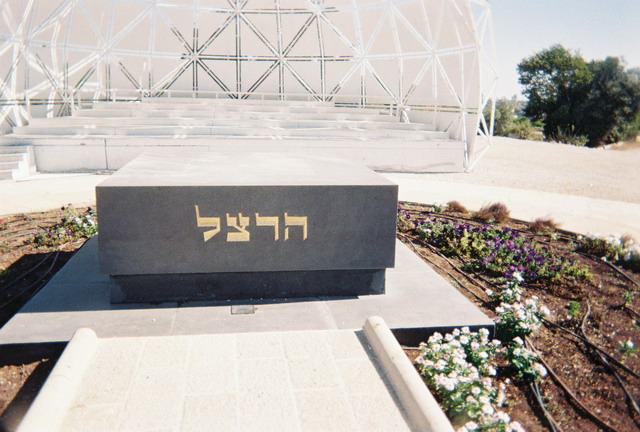
All eyes were on President Obama in Israel last month as he visited Mount Herzl and Yad Vashem. Watching the moving images of the president visiting the graves of Rabin and Herzl, and the adjacent Holocaust memorial, I wondered how aware he was of the fact that the mountain he was on has a very deliberate architecture: At the mountain’s apex rests Herzl’s grave, surrounded by the graves of Israel’s past leaders.
Walk down the slopes and you are in Israel’s national military cemetery. Follow the path further down and you’ve arrived at Yad Vashem. Below the memorial, at the bottom of the mountain, is the “Valley of the Communities,” representing the diaspora Jewish communities destroyed in the Holocaust.
When President Obama walked across this mountain, from Yad Vashem to Mt. Herzl, he was climbing the contours of an ideology embedded into the mountainside: Jewish history has worked its way from the depths of exiled communities doomed to destruction, through the flames of anti-Semitic hatred, up past the children of the nation who gave the ultimate sacrifice, and onwards to the top, where Herzl’s visionary dream is enshrined in black marble: an autonomous Jewish state.
This week in the Israeli calendar tells the same linear story, using not only sacred space but also sacred time: There are seven days between Yom HaShoah and Yom Ha’Atzmaut. It is as if the entire country sits shiva, mourning the tragedy of the Holocaust, then rises to be comforted by the existence of the State of Israel. While the pairing of the Holocaust and Israeli independence has its historical problems, for me it remains a powerful narrative, one that has imprinted itself in my own family history.
Yet Mt. Herzl’s narrative is also an insufficient one, for there — at celebrations of our independence — the conversation unfortunately stops (usually with a good BBQ and a pound of hummus). For years Israelis avoided a serious conversation about what we actually wanted to do with the Jewish state now that it exists. As we re-live that sacred timeline again this week, moving from memory of the Holocaust to celebrating 65 years of Israel’s existence, it is time to say: arriving at Mount Herzl is not enough.
Sixty-five years in, Israel still lacks a constitution and a clear social contract for the Jewish identity of the country. Sixty-five years in, Israel still avoids having a deeper conversation about the role of the two groups that don’t fit into Mount Herzl’s narrative: Jews who live outside Israel and Israeli citizens who are not Jews. Sixty-five years in, we can no longer be sustained merely by the fumes of our own existence, or by the fumes of those who threaten us — as powerful as those realities are. We must have a painful conversation not only about our borders with our neighbors, but about the identity of the home we build together — this is the Zionist calling of our times.
The good news is that Israelis are doing exactly that. The social protests of the summer of 2011 seemed to call an end to the age where every Israeli tribe — haredim, settlers, Tel Avivians — simply does what is best for itself. The new Knesset has brought in fresh political parties that were elected to have a wide conversation about service, education and economics, and about what a secular state does with its religious and cultural inheritance. Hopefully these parties can outgrow the old Israeli tribal politics and stop disenfranchising the easy targets — ultra-Orthodox Jews or Arab citizens of Israel — as has happened so far. Sixty-five years in, Israelis are pushing to get out of the shallow crisis management mode and into a truly inclusive “grand debate”: What is it that we want Israel to be about?
And it is time American Jews engage seriously in this conversation as well. Israel’s friends and allies often get caught up in celebrating the state’s existence and fretting about its external challenges, but lose patience and nuance when it comes to suggesting a vision for what Israel should actually be about. American Jews need to do two things at once: jump into the debate with their own values and visions, while remembering that the Judaism that is right for America is not necessarily what’s right for Israelis.
How exciting would it be if the Salute to Israel Parade in New York would be not just a show of support, 
but also a wide discussion of visions for the Jewish state. How fitting would it be if the week of Yom Ha’Atzmaut would be a time in which American Jews educate themselves on Israel’s challenges and opportunities. Of course we would quickly discover — as Israelis do when having this conversation — that we disagree on what that vision might be. And that discovery would seem to interrupt the superficial unity of the moment. However, this is “Jewish unity” we’re talking about, one that becomes stronger when each of us voices our own opinion while listening to those of others. From its earliest days, Zionism has been a vigorous debate between competing visions, voiced both from Israel and from abroad. While the internal vision for the Jewish state is not an issue for the American president to opine on, it is very much a debate for American Jews to take part in.
Sixty-five years in, something big is happening in Israel, which is finally taking us beyond Mt. Herzl. It is time to for American Jews to turn up the heat and join the conversation.

Tuesday, April 9, 2013

Mount Herzl is Not Enough: The Next Israel Conversation


Published in honor of Yom haZikaron 2012

One. The Mountain of Memory
Jerusalem has not one, but two holy mountains: The Temple Mount in the east, and Har Herzl in the west. Har Herzl, or Har haZikaron, “the Mountain of Memory” has a very deliberate architecture:
On its highest point rests Herzl’s grave. It is surrounded by the graves of Israel’s presidents, prime ministers and leaders. On the slopes of the mountain is the national graveyard for fallen soldiers. Follow the path down the mountain to the west, and you’ve arrived at Yad VaShem, Israel’s Holocaust museum. Take the winding road down from the Yad VaShem museum, and you are at the bottom of the mountain in the “Valley of the Communities,” representing the exilic communities of the Diaspora that were destroyed in the Holocaust.
Topography is used to tell a story, embedding an ideology in the mountainside. When you hike this mountain, you are climbing the contours of an argument: from the depths of exilic reality, doomed to destruction, through the flames of anti-Semitic hatred, up past the sons and daughters of the nation who gave the ultimate sacrifice, and onwards to the top, where a visionary’s dream is enshrined in black marble: an autonomous Jewish state.

Two. Israel’s Holy Week
Herzl's grave at the top of Mt. Herzl
There are moments when the Jewish calendar opens the faceless ticking of time to reveal a beating heart at its center.  Secular life barely uses time in such a way – this approach is normally left to the religious and their holy times. But in Israel, the secular state created a “civil religion” with its own High Holy Days. Israel’s “Yamim Noraim” fall this week, the seven days betweenYom HaShoah, the Holocaust Memorial Day commemorated last Thursday, and Yom haZikaron and Yom HaAtzmaut, Israel’s eerie pair of Memorial for Fallen soldiers, which at nightfall becomes the Day of Independence, to be celebrated this Thursday.
While the way these days flow into each other was a kind of fluke of history, they create a powerful statement. There are seven days between Yom haShoah and Yom haAtzmaut, as if the entire country sits shiva, mourning the loss of the Holocaust, and then arises to be comforted by the existence of the State of Israel. Add Passover to the mix two weeks before, and you have a full ideology, as Prof. Don Handelman has shown, one that is often evoked in the speeches given by Israel’s President and Prime Minister on these days. As Israel’s Prime Minister, Levi Eshkol, put it in 1964:
"Holocaust memorial day falls between the ancient Festival of Freedom and the modern day of Israel’s Independence. The annals of our people are enfolded between these two events. With our exodus from the Egyptian bondage, we own our ancient freedom; now, with our ascent from the depths of the Holocaust, we live once again as an independent nation." (Prime Minister Levi Eshkol, Holocaust day Address, 1964)
Yom haZikaron begins with a blaring siren which is sounded across Israel at exactly 8pm, piercing walls and hearts, and a nation stands still to commemorate those who fell in its honor. It is the most powerful time to be in Israel’s public space: stores close, communities come together, and the radio plays the saddest Israeli songs. The nation turns from a collection of citizens into a family that together remembers their fallen.
Like the mountain, the chronology makes a powerful argument: the tragedy of the Holocaust has taught us that Jews need their own state in order to be free and to be safe. In order to achieve that independence we must be willing to make the ultimate sacrifice—our sons and daughters in exchange for independence. Only after that lesson has been engrained, can we celebrate our independence.
Three. Fissures
Of course, in reality, this clean narrative is riddled with question marks:
Is the Holocaust really to be owned and subsumed by the State of Israel? Zionism existed before the Holocaust and is more than simply a response to anti-Semitism. Perhaps the Shoah should not become a point in an ideological argument, but a historical memory that belongs to humanity as much as to one group of victims.
Yom haZikaron claims to turn the nation into a family, but soldiers of minorities struggle with the Jewish face of this day, and the country is increasingly facing the fact that a diminishing demographic is doing the work while Ultra Orthodox and Secular elites skip out.
Yom haZikaron opening ceremony at the Kotel, 2012
Yom haAtzmaut is challenged both on the left, by anti-Zionist Israelis who seek to release  Israel from its ethnocentric bias, and on the right, by religious groups, betrayed by the evacuation from Gaza, who see not the 1948 secular declaration of independence, but the 1967 unification of Jerusalem and greater Israel, as the high point of the narrative. This ideology subsumes Herzl’s mountain back under the Temple Mount.
Some feel threatened by these dissenting voices, which find issue with the argument put forward by the Memorial Mountain. I’d rather see in this the natural and healthy debates of a country that is trying to do many things at once. These voices should not be pushed out, but rather seriously engaged. We need to have this debate together, and the calendar and topography must be used to further this discourse.
Four. 50 Days
The timeline of Passover-Yom haShoah-Yom haZikaron-Yom haAtzamut needs to be extended to include one other holiday: Shavuot, the anniversary of the Jewish people coming together to become part of a covenant. The secular Zionist calendar loved Passover, renaming it the Festival of Freedom, but had no patience for the rabbinic Shavuot, the festival of Torah and its exilic progeny, Halakha. In the early days of the State, Shavuot was returned to its Biblical agricultural roots as a celebration of first fruits. Now that agriculture got sidelined in Israel all that is left for most Israelis is a consumerist celebration of dairy products.
But to me, Shavuot represents the day in which we get to discuss and decide what we want to do with our previously achieved freedom and independence. Sefirat haOmer, the quirky ritual of counting 50 days from Passover to Shavuot, represents exactly that process: the move from Freedom to Covenant, from childhood dreams to mature decision making.
Israeli independence, and the celebration of its achievement, is important. But it is not sufficient. We need to continue the process, counting up the days to the time where we discuss, agree and sign a covenant of what we – Israel’s stakeholders: citizens and diaspora Jews - want Israel’s existence to be about. Har Herzl is not enough, we must find Israel’s new Mt. Sinai so that this exciting project can take flight.

Rabbi Mishael Zion | Bronfman Fellowships | Tazria-Metzora / Yom haAtzmaut 2012 | Text and the City