Wednesday, January 18, 2012

I Believe in the (Flawed) Promised Land: Springsteen, the Exodus and Faith in Politics


“We still believe, or many of us do, what the Exodus first taught about the meaning and possibility of politics and about its proper form: First; that wherever you live, it is probably Egypt; second; that there is a better place, a world more attractive, a promised land; and third, that the way to the land is through the wilderness. There is no way to get from here to there except by joining together and marching.”
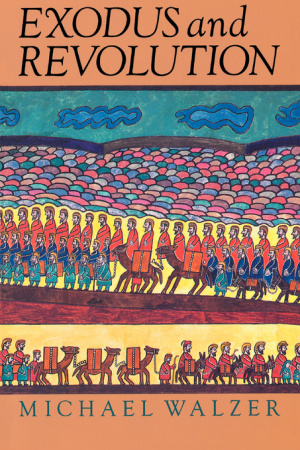
In “Exodus and Revolution”, whose closing paragraph is quoted above, Michael Walzer shows how the idea of the Exodus was the rousing symbolic framework through which many of the political movements of the modern era have found meaning: from the Huguenots through the Puritans and the Founding Fathers, to MLK and the civil rights movement. Thanks to those movements, the ideas of Egypt and Promised Land are sewn deeply into the tapestry of the American narrative. For Walzer, the “meaning and possibility of politics” in the West will always turn on the belief in the basic categories of Egypt/Promised Land.
It is rousing to see how the narratives of the Torah continue to provide categories through which people make sense of their reality. This year, in which so many stood up to demonstrate against the Egypt that their countries had turned into (in Tunisia, Syria, Israel, the US, and – of course – Egypt itself), and as the Torah portions cycle back to the story of the Exodus, we should revisit the role that the concepts of Egypt and the Promised Land play in our own quest for change.
In this week’s Torah portion, VaEra, God gives one of the most rousing speeches of the Torah, naming Egypt, Exodus and Promised Land:
“Say to the Children of Israel: I am Adonai,
I will bring you out
From beneath the burdens of Egypt
I will rescue you
From servitude to them,
I will redeem you
With an outstretched arm, with great acts of judgement;
I will take you for me
As a people
And I will be for you
As a God;
And you shall know
That I am Adonai your God,
Who brings you out
From beneath the burdens of Egypt.
I will bring you into the land
I will give it to you as a possession, I Adonai.”

לָכֵן אֱמֹר לִבְנֵי-יִשְׂרָאֵל: אֲנִי ה’.
וְהוֹצֵאתִי אֶתְכֶם מִתַּחַת סִבְלֹת מִצְרַיִם,
וְהִצַּלְתִּי אֶתְכֶם מֵעֲבֹדָתָם;
וְגָאַלְתִּי אֶתְכֶם בִּזְרוֹעַ נְטוּיָה, וּבִשְׁפָטִים גְּדֹלִים.
וְלָקַחְתִּי אֶתְכֶם לִי לְעָם,
וְהָיִיתִי לָכֶם לֵאלֹהִים;
וִידַעְתֶּם, כִּי אֲנִי ה’ אֱלֹהֵיכֶם,
הַמּוֹצִיא אֶתְכֶם מִתַּחַת סִבְלוֹת מִצְרָיִם.
וְהֵבֵאתִי אֶתְכֶם אֶל-הָאָרֶץ
אֲשֶׁר נָשָׂאתִי אֶת-יָדִי
לָתֵת אֹתָהּ לְאַבְרָהָם לְיִצְחָק וּלְיַעֲקֹב;
וְנָתַתִּי אֹתָהּ לָכֶם מוֹרָשָׁה, אֲנִי ה’.


The belief in the Promised Land creates the possibility of revolution, of being taken out of our current reality, of redemption. Its greatest enemy is cynicism: disbelief in the possibility of change. And indeed, the cynical Israelites shrug their shoulders:

“Moshe spoke thus to the Children of Israel.
But they did not hearken to Moshe,
Out of shortness of spirit and out of hard servitude.”
(Exodus 6:6-9)
וַיְדַבֵּר מֹשֶׁה כֵּן, אֶל-בְּנֵי יִשְׂרָאֵל
וְלֹא שָׁמְעוּ, אֶל-מֹשֶׁה,
מִקֹּצֶר רוּחַ, וּמֵעֲבֹדָה קָשָׁה.
(שמות ו:ו-ט)

The Israelites were not wrong to be wary of the possibility of change. We know the Promised Land isn’t really all that it is made up to be, and Egypt has its benefits too... We’ve read our history books and we know that the Promised Land often promises war, discord, corruption, idolatry and immorality. Too often yesterday’s Promised Land turns out to be todays Egypt. No one is clearer about this danger than Moshe’s successors, the prophets of the later books of the Bible. There is perhaps no greater Egypt than the work of politics itself. Indeed, the very Egypt/Promised Land dichotomy is a dangerous one, for a messianic Promised Land can be seen as an end that justifies all means, and a community disillusioned with the notion of a Promised Land can become alienated and apathetic.
These realizations makes many of us avoid politics or social change, and avoid great visions of Promised Lands, focusing instead on our personal spiritual redemption, our 401(k), or on local acts of charity.
What is needed to mediate this tension is a more nuanced vision of the Promised Land: not an end to all problems, but an opportunity to play out the old problems on a new playing field. That would allow us to be a bit more forgiving to the Promised Lands that have let us down – alongside galvanizing us to fight for their identity and not write them off.
In this more nuanced vision, however, we must not lose sight of the power of the Egypt/Promised Land dichotomy. Rather, a “second naiveté” must be embraced, a return to simple dichotomies which despite their unrealistic nature allow us to shout out revolutionary cries and wax poetic about a “New World”, a “Redemptive Homeland” or a “City on the Hill”.

Judaism has embedded the story of the Exodus into its collective memory and identity for exactly that purpose, if at times without the nuance: at the Passover Seder, in daily prayers, in learning and icons, we retell the story of breaking out of Egypt and journeying towards the Promised Land, refreshing our political imagination and prompting us to jump to action in fighting against our contemporary Egypts.
Judaism did it first, but America’s optimistic culture is where the naïve belief in the Exodus reached a peak of influence as a category of political and social change. One American in particular epitomizes both the Promise and the nuance: The Boss, the singer whose tours President Obama described  as “Not so much concerts, but communions”. The dichotomy is prevalent throughout his work, but Bruce Springsteen is nowhere more explicit than in his 1978 song, “The Promised Land” (from Darkness on the Edge of Town). It’s second verse reads (you should really watch it here http://youtu.be/ekdXmPlCBOY )

I've done my best to live the right way
I get up every morning and go to work each day
But your eyes go blind and your blood runs cold
Sometimes I feel so weak I just want to explode
Explode and tear this whole town apart
Take a knife and cut this pain from my heart
Find somebody itching for something to start

The dogs on Main Street howl
'cause they understand
If I could take one moment into my hands
Mister I ain't a boy, no I'm a man
And I believe in a promised land


Springsteen describes a young man working in his “daddy’s garage” in a Utah desert, trying to do the right thing, when reality suddenly reveals itself to be an Egypt – eyes go blind, blood runs cold. There is a (violent) desire to break free, to do what “men do”, and head out for the Promised Land. In his performances, that last line gets repeated again and again, becoming a mantra, a battle cry, a prayer: I believe in a promised land. He knows he is just “chasing some mirage” – that the dichotomy ain’t so simple, that the Promised Land is flawed, and yet he can’t allow himself to stop believing in it.
Listening to the song, the listener regains belief in the message of the Exodus, as summarized by Walzer’s closing words: “We still believe… First; that wherever you live, it is probably Egypt; second; that there is a better place, a world more attractive, a promised land; and third, that the way to the land is through the wilderness. There is no way to get from here to there except by joining together and marching.”


Thanks to my friend Stephen Hazan Arnoff, who taught me how to listen to The Boss - and so much more. Check out Stephen's Blog post on Springsteen's recent single or his article on the topic in "Reading The Boss".


Rabbi Mishael Zion | Bronfman Fellowships | VaEra 2012 | Text and the City

Wednesday, January 11, 2012

"Love the Questions": The Burning Bush and the Western Myth of the Hero


Western culture loves it heroes. As Freud’s student Otto Rank showed in his classic “The Myth of the Birth of the Hero” (1914) Western culture is deeply founded on the myth of the hero (from Oedipus and Jesus to Harry Potter and most Hollywood films). A child (male) with special powers, born in dangerous circumstances, returns to receive his deeper calling and consequently conquers evil and redeems the world. Having been bred on those stories as children (whether it is through canonical sacred texts or the incessant reading of hero-centered fantasy books), we learn to identify ourselves as the “heroes of our own lives”, holders of unique powers and a solid destiny. We learn to expect that we have an answer to the world’s question.
Moshe’s life is the defining Biblical hero journey, and the burning bush is the canonical Western text of a person who receives a divine destiny, moving from refusal and denial to embrace and action. In contemporary leadership talk Moshe is committed to a vision and exists to turn that vision into a reality.
Unless you are the reader Yehuda Amichai.
Yehuda Amichai, in a short poem that spans Moshe’s entire life, draws a an anti-hero, a person not motivated by the mission God provides him at the bush as much as by a deeper longing, an unanswered question in his soul.
Amichai notices that at the moment of God’s revelation to Moshe at the burning bush, Moshe does something very strange: he hides his face, afraid to gaze upon God. This leads him to offer the following reading of Moshe’s journey:

Moses, our teacher, only once saw God’s face
And forgot.  He did not want to see the wilderness
Nor, even the promised land, but only God’s face.
He struck the rock in the fury of his longings
He climbed Mt. Sinai and descended; he shattered the two
Tablets and made a Golden calf; he searched
In fire and cloud; but all he could remember was
God’s strong hand and his outstretched arm
But not his face; and he became like a person who yearns
To remember the face of their beloved, but cannot.
He made for himself a ‘mug shot’ taking from the face
Of God, the face of the burning bush, and the face of
Pharaoh’s daughter leaning over him as an infant in the basket
And he circulated the picture among all the tribes of Israel
And throughout the wilderness. But no one had seen
And no one recognized.  And only at the end of his life,
On Mt. Nebo he saw and died
in a kiss from the face of God. 

Yehuda Amichai | Patuach, Sagur, Patuach translated by Steve Sager p.29, #5

משה רבנו ראה רק פעם אחת את פני האלוהים
ושכח. הוא לא רצה לראות את המדבר
ואפלו לא את הארץ המבטחת, אלא רק את פני האלהים.
הוא הכה בסלע בזעם געגועיו
הוא עלה להר סיני וירד, הוא שבר את שני
לוחות הברית ועשה עגל זהב, הוא חפש
באש ובעשן, אבל הוא זכר רק את
יד האלהים החזקה ואת זרועו הנטויה
ולא את פניו והיה כמו אדם שרוצה
לזכר את פני מי שאהב ולא יוכל.
הוא עשה לעצמו קלסתרון מפני
האלהים ופני הסנה הבוער ופני
בת פרעה שנרכנה מעליו כשהיה תינוק בתבה,
והפיץ את התמונה בכל שבטי ישראל
ובכל המדבר, אבל איש לא ראה
ואיש לא הכיר. ורק בסוף חייו,
על הר נבו ראה ומת
בנשיקת פני האלהים.

יהודה עמיחי, "פתוח סגור פתוח"


Moshe can be seen here as a tragic figure, oblivious of the great achievements of his life as he is caught up in his own existential search. But perhaps Amichai’s Moshe is not an anti-hero, but rather an inspiration to a deeper type of leadership. Amichai is suggesting that a deeper motivator for our action in the world is not the belief in some aggrandized calling, but rather a longing, a broken heart, an embrace of our existential journey.
I hear this same troupe in the writings of Rainer Maria Rilke.  Writing to a young impatient wannabe poet in his “Letters to a Young Artist”, Rilke writes:

July 16, 1903
My dear Mr. Kappus: I have left a letter from you unanswered for a long time; … As I read it now, in the great silence of these distances, I am touched by your beautiful anxiety about life…
I would like to beg you, dear Sir, as well as I can, to have patience with everything unresolved in your heart and to try to love the questions themselves as if they were locked rooms or books written in a very foreign language. Don't search for the answers, which could not be given to you now, because you would not be able to live them. And the point is, to live everything. Live the questions now. Perhaps then, someday far in the future, you will gradually, without even noticing it, live your way into the answer.

Reading the burning bush in light of Rilke and Amichai, the inextinguishable flame of God’s burning bush becomes the inextinguishable devotion to questions, journey and yearning. Stay attuned to the yearning, not the heroic calling, says Amichai. This is perhaps the key to Moshe’s humble leadership, which got him known in the tradition as the “faithful shepherd.” It might even be the key to a new, meek but committed, Western heroism. “Live the questions now. Perhaps then, someday far in the future, you will gradually, without even noticing it, live your way into the answer.”


Wednesday, January 4, 2012

Yaakov Never Died, and Some Gospel: Two Generations, Two Songs


This week’s Parsha is all about Yaakov’s passing away in Egypt. I always enjoy the moment when Yaakov, the namesake of Israel, is mummified by the Egyptian doctors, and all of Egypt comes out to lament his passing. It’s a great reminder of the way Judaism bounces back and forth between its unique rituals and the rituals of the cultures in which they lived. The Talmud quips about Yaakov’s death:

Rav Nachman and Rav Yitzhak were dining together. Said Rav Nachman to Rav Yitzhak: Say something meaningful!
Rav Yitzhak said: Rabbi Yohanan taught: “Yaakov Avinu (our father) didn’t die!”
Said Rav Nachman to Rav Yitzchak: What? Was it for naught that the eulogizers eulogized and the mummifiers mummified and the buriers buried?
He responded: We are simply expounding from scripture, for Jeremiah (30:10) says: “Do not fear, my servant Yaakov… for I will redeem you from afar and your offspring from the lands of their captivity” – Yaakov is analogized to his offspring. As long as his offspring are alive, he too is alive.
(Babylonian Talmud Taanit 5b)
רב נחמן ור' יצחק היו יושבים בסעודה.
א"ל רב נחמן לר' יצחק: יאמר לנו אדוני מילה!...
אמר לו: הכי אמר רבי יוחנן: יעקב אבינו לא מת.
אמר לו: וכי בכדי ספדו ספדנייא וחנטו חנטייא וקברו קברייא?
אמר לו: מקרא אני דורש שנאמר (ירמיהו ל) "ואתה אל תירא עבדי יעקב נאם ה' ואל תחת ישראל כי הנני מושיעך מרחוק ואת זרעך מארץ שבים" - מקיש הוא לזרעו, מה זרעו בחיים אף הוא בחיים (תלמוד בבלי תענית ה:)

This Talmudic text is the inspiration to a Jewish song that captured the imagination of an entire Jewish generation: “Am Yisrael Chai, Od Avinu Chai! The Jewish People are alive, Our Father is still alive!” sang Shlomo Carlebach in the 60’s and 70’s. It was a brilliant song: Taking Joseph’s urgent question to his brothers from last week’s Parsha: “העוד אבינו חי?” – “Is our father still alive?” (Gen 45:3), Shlomo turned the question into an answer: “Yes! Our father is still alive, WE are still alive!”
For many Jews of the boomer generation, the song encapsulates a pivotal aspect of their Jewish identity. The song resonated so powerfully in the 1960’s and 1970’s because it was constantly edified by current events: When Shlomo sang this song about Soviet Jews who experienced Communist identity effacement, it became the anthem of the Soviet Jewry movement across the Jewish world. For the children of Holocaust survivors, it was a real question: so many of us have been killed, will we really survive? In the months before 1967 everyone was sure that Israel was surely to be destroyed, with citizens digging preparatory graves in Jerusalem’s Sacher park and jokes about how “the last Israeli Jew should turn off the light when he leaves”. When the existential threat turned into a miraculous, earth-shattering victory, young Jews could rally and sing: “Am Yisrael Chai!”

For me, this song is kitsch. With all due respect to the enormously significant, painful and dramatic moments of 20th century Jewish history, for most of my generation, singing “Am Yisrael Chai” is a tacky, overstated, and even self-indulgent thing to do. I’m over simplifying things, but while I’m not ignoring the fragility of Jewish existence, I am trying to point to a sociological reality that no amount of Holocaust education can overturn: the reality of the 60’s and 70’s was not the reality of the 80’s and 90’s. Shlomo’s song doesn’t have the same psychological effect, because the crisis was never one we experienced in the first person: “Am Yisrael Chai” was never a question, only an answer.
For the previous generation Jewish existence was primarily about, well, existence. Being alive, being allowed to freely – and sovereignly – celebrate our identities, rituals and communities. But for the next generation, mere continuity is not enough. We want to be about something. My teacher David Hartman called this “Auschwitz or Sinai”. Are we going to be simply about existing (Auschwitz), or are we going to give content to our existence (Sinai). Sinai is about the idea ofmitzva, of action, that redeems us from the egocentricity of our own existence and propels us towards having a mission in the world (what that mission is, we can argue some other day).

Some lament this generational divide. I’d rather be productive: If we can’t sing “Od Avinu Chai”, what song about “Our Father” can we sing? This brings me to a lesser known Shlomo Carlebach tune, a rare recording of him singing the great American spiritual “I’m on my way to Canaan land.” It too is highly relevant to this week’s parsha:
Yaakov, dying in Egypt, forces his sons to swear they’ll bury him in Canaan, the land that was promised to his ancestors. Yaakov is the only patriarch to have spent most of his life outside the land of Canaan: His best years are wasted in Lavan’s house, his last days in Egypt. His life story is about someone who is constantly on the way, not there yet, but adamant that he’ll get there. His dying wish is to arrive.
This in itself is a message worth learning from Yaakov: the ability to see that even when life takes me to very different destinations, I won’t lose sight of the promised land.
Which brings me to the spiritual. Shlomo recorded this in the ‘60’s, and I love it for its simplicity, but also for its tenacity: “I’m on my way to Canaan’s land!” goes the spiritual. And if that doesn’t sound Jewish enough to you, there’s a stiff necked part that follows: “If sister don’t go, won’t hinder me; If sister don’t go, won’t hinder me… I’m on the way, yes my Lord, I’m on the way!”. Those are the words, but you really want to listen to the song (unfortunately, I couldn’t find my copy of Shlomo’s recording, but better yet, here’s a link to the great blue-grass gospel duo Flatt and Scruggs’s rendition).
There is no solution here to the larger questions of Jewish identity and Jewish continuity. But there is a strong statement about process. For a younger generation, Jewish existence cannot be about mere existence. It must be about a commandment (Lech Lecha!), a journey, a meaningful transformation. This shouldn’t be a self-indulgent personal journey, but rather one that starts with the self and grows out to community, society, and the world. To paraphrase the Talmudic saying we started off with: “As long as his offspring are on their way, Yaakov is on his way", or in the words of the song: "Sweet Lord, we're on our way...

Tuesday, December 27, 2011

Light, Darkness and other Religions: Thoughts on the 8th Night of Hanukkah


Driving down the streets of Manhattan after Shabbat, I was struck by the sight of hundreds of Protestants walking towards the Cathedral for Midnight Mass. I returned home to discover Catholics had lined the sidewalks outside my house waiting to enter a local church. There’s something very moving about seeing people go to shul.
With Chanukah candles in some windows, and Christmas trees in others, December in America lends itself to mushy ecumenical statements of “hey, we’re not so different after all”. I believe the differences between religions and identities are critical, but pointing out the shared moments is just as important.
This week, as the pope bemoaned the fact that “the superficial glitter” hides the real meaning of the religion and its values, I too was nodding: "Today Christmas has become a commercial celebration, whose bright lights hide the mystery of God's humility, which in turn calls us to humility and simplicity." The Pope was calling it the way it is: out of the legitimate desire to turn Christmas into a less religious day and more of a “one size fits all” December holiday, the deeper meanings of the day are often lost. It’s good to have a day to celebrate family, and exchanging gifts is a great way to strengthen relationships. I also find value in families of diverse religious backgrounds finding creative ways to showcase their complex identities in their homes. But rituals and holidays have deeper meanings and statements that can easily be lost if there is nothing but glitter and gift wrapping, and it is up to us to infuse our rituals with the deeper meaning, values and narratives we wish to give as a gift to ourselves this year.
Agreeing with the pope and being inspired by people of other religions as they pray, reminded me that while as a Jew I have a strong coalition with Jews of all practices and beliefs, Jews are not my only coalition. As a religious person in the modern world, I have a coalition with religious people of other faiths, as we claim together that living a spiritual life of humility and observance is a value in this secular age we live in. Watching the news from Beit Shemesh this week, where extremist Ultra-Orthodox men have pushed all boundaries in their misogynistic ways, I was reminded that religious extremists have their own coalition, with communities of various religions reacting to modernity in similar fundamentalist ways. In response to them I belong to a third coalition, of people who promote liberal and humanistic values, beyond and within categories of religiosity or faith. But that deserves its own post…
So how do I hold a complex identity that shares values across political and religious boundaries, and yet retains its unique authenticity? Hanukkah offers us the ability to celebrate both within our Jewish identity, alongside celebrating a deeper human phenomenon that is shared across cultures. People love to point out the “ancient pagan” origins of certain holidays, but for the non-historicists among us this is just another word for “ancient human” origins. Hannukah, like many other winter holidays, is a festival of lights which arrives around the darkest night of the year. The Talmud itself retells the Hanukkah story as a humanistic holiday. In this version, from Tractate Avodah Zara (as part of a discussion of what distinguishes Jewish from pagan!) Hanukkah is described as having been enstated by Adam, the first human being. The language of the Adam Hanukkah myth mimics, almost parodies, the story of the Maccabees’ Hannukah:
Our Rabbis taught:
When Adam [the first human] noticed
that the days were getting shorter, he said:
"Shame on me,
the world is perhaps becoming darker because of my sins,
and will soon return to chaos! Is this what the heavens meant when they punished me with mortality?"
For eight days he prayed and fasted.
When the period of Tevet [the month after Kislev] arrived
and he saw that the days were now growing longer,
he realized: "This is the way of the world." 
Adam then made eight days of celebration.
The following year he instated these and those as holidays.
Talmud Bavli Avodah Zara 8b
תנו רבנן  [שנו רבותינו]:
לפי שראה אדם הראשון יום שמתמעט והולך,
אמר: "אוי לי, שמא בשביל שסרחתי עולם חשוך בעדי וחוזר לתוהו ובוהו,
וזו היא מיתה שנקנסה עלי מן השמים",
עמד וישב ח' ימים בתענית [ובתפלה],
כיון שראה תקופת טבת
וראה יום שמאריך והולך,
אמר: "מנהגו של עולם הוא",
הלך ועשה שמונה ימים טובים,
לשנה האחרת עשאן לאלו ולאלו ימים טובים
(תלמוד בבלי מסכת עבודה זרה דף ח עמוד ב)
The admittance of the Talmud that Hanukkah did not start with the Maccabees holds a critical lesson for living in a world of multiple narratives. It allows me to celebrate my story, the Maccabean Hanukkah, alongside recognizing the universal elements of the holiday, and rejoicing in those as well. We could rewind all the holidays into a humanitrian unitarian mush, or fast forward them into a bland commercial festivus, but I personally am invested in each group celebrating their own narrative, while recognizing and rejoicing those other narratives as well. It bears the danger of becoming hyper-particularistic, but it also retains the rich authenticity of unique traditions, that each hold their own recipe for a better world.
Before leaving Hanukkah and this Talmudic passage, on this night of 8 candles it is worth pointing out that this story also makes a very moving statement about the human reaction to darkness. When Adam first realizes that sunlight is diminishing and the nights are getting longer, he immediately turns to blame himself for this suffering. But once he realizes that this darkness is not about him, his guilt or even his repentance, but rather that this is “the way of the world”, he then CELEBRATES it.
In this story, Hanukkah is a celebration of the fact that there are times in which darkness happens, and yet it is followed by times of increased light. Human beings lighting candles during the darkest nights is perhaps part of a divine-human covenant: when God’s world (tragically?) provides more darkness, we human beings promise to step up and provide more light. Mortality is not a “fall of man”, it is “the way of the world”, and it requires a certain response from us – lighting candles. I was reminded of this story last week when the father of an alumnus told me how he left in the middle of a pivotal conference attended by the President, in order to sit at the deathbed of his best friend. The suffering of death is unfortunately the way of the world. The candles we light through our own acts of compassion are what will help us get through the darkness and the cold, until spring arrives again.
Hanukkah Sameach and have a warm winter,
Mishael


Single Malt Scotch for Feminists: A Book Review


The Masculine Dilemmas of the Partnership Minyan


Published in the Forward, 30 December 2011, this is my review of:
The Men’s Section: Orthodox Jewish Men in an Egalitarian World
By Elana Maryles Sztokman

A few years ago, a friend announced that he intended to start a “Kiddush club” at our synagogue. “Our shul needs more of a social scene,” he declared, “and some high-quality single malt whisky!” he added jokingly. I was vehemently opposed. Our synagogue is a “partnership minyan,” which seeks to maximize women’s participation in the prayer service within the bounds of Halacha and the Orthodox community. A Kiddush club smacked to me of a classic patriarchal construction, a complete contradiction of our attempt at re-aligning the gender dynamic of Orthodox synagogue life.
I was thinking of this exchange as I was reading Elana Sztokman’s new book, “The Men’s Section: Orthodox Jewish Men in an Egalitarian World,” an ethnography of men in partnership minyanim. Sztokman asks a fascinating question: What do the men get from it?
As Sztokman describes at the beginning of the book, the partnership minyan phenomenon started in 2001 with two small minyanim in Jerusalem (Shira Chadasha) and New York (Darkhei Noam). Those two are now regularly attended by hundreds every Shabbat and have prompted 25 other such minyanim in places as far flung as Melbourne and Beersheva and as traditional as Skokie, Ill., and Englewood, N.J. At these minyanim, women and men share equally in Torah reading and speaking before the community, and women lead some parts of the service — but men and women are separated by a mechitzah, the barrier between the genders that is the hallmark of an Orthodox synagogue. While still considered anomalous in the eyes of most of the Orthodox community, partnership minyanim are no longer beyond the pale.


Read the rest of the review at: http://www.forward.com/articles/148302